
Schedly resources
The Ultimate Guide to Integrating Scheduling Tools into Modern Project Management Workflows
Introduction: The New Era of Project Management
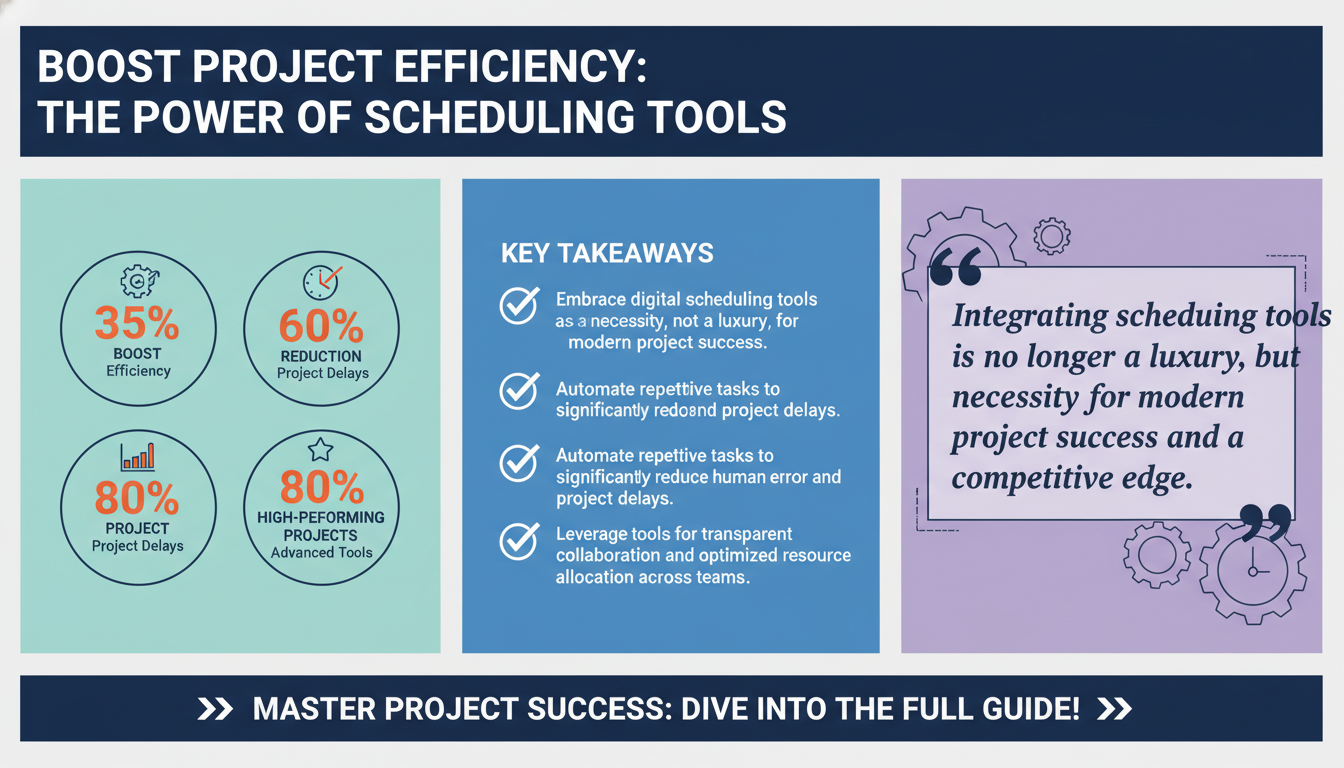
In today's digital age, the landscape of project management is evolving at an unprecedented pace. The integration of scheduling tools into project management workflows is no longer a luxury but a necessity. These digital tools provide a unified approach to managing time and resources, enabling organizations to operate with greater efficiency and precision. According to McKinsey's insights, companies that embrace automation and digital tools in project management experience a 35% boost in overall efficiency. Understanding this shift is crucial as businesses seek to enhance productivity and streamline operations. This comprehensive guide delves into the intricacies of integrating scheduling tools, offering actionable insights for enterprises eager to elevate their project management strategies and stay competitive in the fast-paced business environment.

Project management has transitioned from traditional methods such as manual scheduling and paper-based processes to highly sophisticated digital platforms that integrate artificial intelligence and machine learning. These advanced technologies provide predictive analytics, helping project managers foresee potential pitfalls and make informed decisions proactively. For example, AI-driven tools can analyze large datasets, offering insights into project timelines, potential bottlenecks, and resource allocation, ultimately leading to more strategic planning and execution.
The advancement in project management tools also reflects in their ability to support remote work environments, a trend that has surged following the global shift towards more flexible working arrangements. Tools that offer cloud-based solutions ensure that teams can collaborate effectively, regardless of their physical location. This capability is crucial in the modern workforce, where agility and adaptability are key to maintaining competitive advantage.
Understanding the Role of Scheduling Tools in Project Management
Scheduling tools are pivotal in modern project management, transforming how teams manage time and resources. These tools automate repetitive tasks, reduce the risk of human error, and provide a centralized platform for managing schedules, deadlines, and resources. For instance, a Forrester report found that companies using digital project management tools report a 60% reduction in project delays. Such statistics underscore the importance of these tools in ensuring projects are delivered on time and within budget.

Moreover, scheduling tools enhance team collaboration by offering a transparent view of task progress and dependencies. This transparency fosters accountability and empowers team members to manage their time more effectively. A study from Gartner highlights that 80% of high-performing projects employ advanced scheduling and collaboration tools, which facilitate better team dynamics and communication.
Streamlining Project Execution
Beyond time management, scheduling tools are vital in resource allocation. They help managers assign tasks based on team members' availability and skill sets, optimizing workforce utilization. This strategic alignment of resources is particularly beneficial for complex projects involving cross-functional teams, where ensuring the right person is working on the right task at the right time is critical to success. For instance, tools like Microsoft Project and Asana offer functionalities that allow project managers to see which team members are overbooked or underutilized, enabling them to redistribute tasks and balance workloads effectively.
Pro Tip: Leveraging Automation
Implementing automation within scheduling tools can significantly enhance project execution. Automating routine tasks such as meeting reminders, deadline alerts, and status updates can free up valuable time for project managers and team members to focus on more strategic activities. This approach not only improves efficiency but also helps in maintaining consistent communication, ensuring that all stakeholders are aligned and informed.
Choosing the Right Scheduling Tools for Your Workflow
Selecting the appropriate scheduling tools is critical for successful integration into project management workflows. The choice of tool can significantly impact the effectiveness and efficiency of project management processes. Key factors to consider include team size, project complexity, and specific industry needs. According to HubSpot's analysis, businesses should prioritize tools that offer customization, scalability, and robust integration capabilities. Customization allows teams to tailor the tool's features to their unique workflows, enhancing usability and adoption rates.

Customization and Scalability
Scalability is another crucial factor, ensuring that as a business grows, its scheduling tools can accommodate increasing project demands without compromising performance. For example, a tool that can seamlessly scale from managing a single project to handling multiple, complex projects simultaneously can be invaluable for growing businesses. Robust integration capabilities enable seamless connectivity with other enterprise systems, such as CRM and ERP platforms, further streamlining operations and providing a comprehensive view of the business landscape.
An important consideration for customization is user permissions. Many tools allow for different levels of access, ensuring that sensitive information is protected while still allowing team members to access the data they need to perform their tasks effectively. This feature is particularly beneficial in industries such as healthcare and finance, where data security is paramount.
Expert Insight: Evaluating User Interface
When evaluating scheduling tools, businesses should also consider user interface and support services. An intuitive interface minimizes the learning curve, allowing team members to quickly adapt and utilize the tool effectively. Comprehensive support services ensure that teams can quickly resolve any technical issues, maintaining productivity and minimizing disruptions. Tools with a user-friendly interface often see higher adoption rates and better overall user satisfaction. Consider platforms that offer trial periods to test usability before full deployment.
Integrating Scheduling Tools: A Step-by-Step Process
Integrating scheduling tools into existing workflows requires a structured approach to ensure a smooth transition. The first step involves conducting a thorough workflow analysis to identify areas where scheduling tools can add the most value. This analysis should involve key stakeholders to gain a comprehensive understanding of current processes and pain points.

Step 1: Workflow Analysis
Once the analysis is complete, the next step is to select a scheduling tool that aligns with the identified needs and objectives. As highlighted in a Forbes article, involving end-users in the selection process increases buy-in and reduces resistance to change. This engagement ensures the tool meets the practical needs of those who will be using it daily.
Step 2: Tool Selection and Configuration
After selecting the tool, the integration process involves configuring the tool to fit existing workflows, training team members, and establishing metrics for success. Continuous monitoring and iterative improvements are essential to maximize the tool's effectiveness and ensure long-term adoption. Regular feedback loops and data-driven adjustments can lead to continuous improvements in project outcomes.
Step 3: Training and Adoption
Training is a critical component of successful tool integration. Offering comprehensive training sessions ensures that all team members understand how to use the tool effectively and can leverage its features to enhance their productivity. Additionally, ongoing support and refresher courses can help reinforce learning and address any new challenges that arise as the tool is used in practice.
Proprietary Framework: The Schedly Integration Model
To facilitate the seamless integration of scheduling tools, the Schedly Integration Model offers a structured approach tailored to diverse business needs. This model comprises four key stages: Assessment, Selection, Implementation, and Optimization.
Stage 1: Assessment
This stage involves evaluating current workflows and identifying integration opportunities. It includes stakeholder interviews and process mapping to pinpoint inefficiencies. This thorough assessment helps in understanding the current state and defining the desired future state.
Stage 2: Selection
Based on the assessment, businesses choose tools that align with their strategic goals. This stage emphasizes the importance of customization and scalability, ensuring the chosen tool can evolve with the business.
Stage 3: Implementation
During implementation, teams configure the tools and conduct training sessions. This stage is critical for fostering user adoption and minimizing disruptions. Proper training ensures that team members are confident in using the new tools.
Stage 4: Optimization
The final stage focuses on continuous improvement. By analyzing usage data and gathering feedback, businesses can refine workflows and enhance tool performance. This ongoing process ensures that the tools continue to meet the evolving needs of the business.
Common Mistakes to Avoid During Integration
While integrating scheduling tools offers numerous benefits, there are common pitfalls that businesses should avoid to ensure a successful implementation. One major mistake is neglecting to involve end-users in the selection process, which can lead to low adoption rates and dissatisfaction. Without input from those who will be using the tools, there's a risk of selecting a solution that doesn't meet the practical needs of the team.
Inadequate Training
Another mistake is underestimating the importance of training. Without adequate training, team members may struggle to leverage the tools effectively, resulting in suboptimal usage. As noted by BCG's report on digital transformation, comprehensive training is a key success factor in technology adoption.
Setting Clear Objectives
Additionally, businesses often fail to set clear objectives and metrics for tool integration. Without these benchmarks, it becomes challenging to measure success and identify areas for improvement. Establishing KPIs and regularly reviewing performance data are crucial steps in the integration process. These metrics help in tracking progress and making informed decisions about future improvements.
Enhancing Team Workflows with Scheduling Tools
Scheduling tools have the potential to significantly enhance team workflows by improving communication, collaboration, and efficiency. These tools provide a centralized platform where teams can share information, track progress, and manage tasks, fostering a culture of transparency and accountability. According to a study by Harvard Business Review, teams using collaboration tools report a 25% increase in productivity. This boost is attributed to streamlined communication and reduced time spent on administrative tasks.
Automation and Workflow Optimization
Moreover, scheduling tools enable teams to optimize their workflows by automating routine tasks, such as meeting scheduling and resource allocation. This automation frees up time for strategic activities, allowing team members to focus on high-value tasks that drive business growth. The ability to automate repetitive tasks not only increases efficiency but also reduces the risk of errors, leading to more reliable project outcomes.
Pro Tip: Leveraging Collaborative Features
Maximize the effectiveness of scheduling tools by fully leveraging their collaborative features. Tools that offer real-time updates and notifications keep everyone on the same page and reduce the likelihood of miscommunication. Encourage team members to consistently use shared calendars and task boards to maintain visibility and ensure timely updates on project status.
Case Study: Successful Integration of Scheduling Tools in a Mid-Sized Firm
To illustrate the practical benefits of scheduling tool integration, consider the case of a mid-sized consulting firm that successfully integrated scheduling tools into its project management workflows. Facing challenges with resource allocation and project delays, the firm sought to enhance its operational efficiency.
Implementation Process
By implementing the Schedly Integration Model, the firm conducted a comprehensive workflow assessment to identify bottlenecks. They selected a highly customizable scheduling tool that aligned with their needs and integrated seamlessly with their existing systems.
Results and Benefits
The integration resulted in a 40% reduction in project delays and a 30% improvement in resource utilization. Moreover, team members reported higher job satisfaction due to clearer task assignments and improved work-life balance. This case underscores the transformative impact of thoughtfully integrated scheduling tools on business operations and employee morale.
FAQ: Addressing Common Questions About Scheduling Tool Integration
Q1: What are the key benefits of integrating scheduling tools into project management workflows?
Integrating scheduling tools enhances productivity, improves resource allocation, and fosters better team collaboration. These tools streamline processes, enabling teams to work more efficiently and effectively.
Q2: How do I choose the right scheduling tool for my business?
Consider factors such as customization, scalability, integration capabilities, and user interface when selecting a tool. Assessing these elements ensures that the tool meets both current and future needs of the business.
Q3: What are common mistakes to avoid during integration?
Avoid neglecting end-user involvement, underestimating training needs, and failing to set clear objectives. Addressing these areas ensures a smoother integration process and higher adoption rates.
Q4: How can scheduling tools improve team workflows?
They streamline communication, automate routine tasks, and provide a centralized platform for task management. This leads to increased productivity and efficiency across teams.
Q5: What is the Schedly Integration Model?
It is a four-stage framework for integrating scheduling tools, including assessment, selection, implementation, and optimization. This model provides a structured approach to ensure successful tool integration.
Conclusion: Embracing the Future of Project Management
As businesses navigate the complexities of modern project management, the integration of scheduling tools offers a pathway to greater efficiency and productivity. By following structured frameworks like the Schedly Integration Model, organizations can unlock the full potential of these tools and drive sustainable growth. The ability to streamline operations, improve collaboration, and make data-driven decisions is invaluable in today's competitive business environment.
To further enhance your workflows, consider leveraging complementary platforms such as Apparatuz for workflow automation, Applicantz for recruitment management, and Supportly for customer service excellence. By integrating these solutions, businesses can create a comprehensive ecosystem that supports seamless operations.
For more insights on enhancing productivity through scheduling automation, explore our resources on how automation in scheduling is revolutionizing project management for 2026. Embracing these advancements positions businesses to achieve their strategic goals and remain competitive in an ever-evolving market landscape.