
Schedly resources
The Ultimate Guide to Overcoming Complex Scheduling Challenges in Enterprise Teams
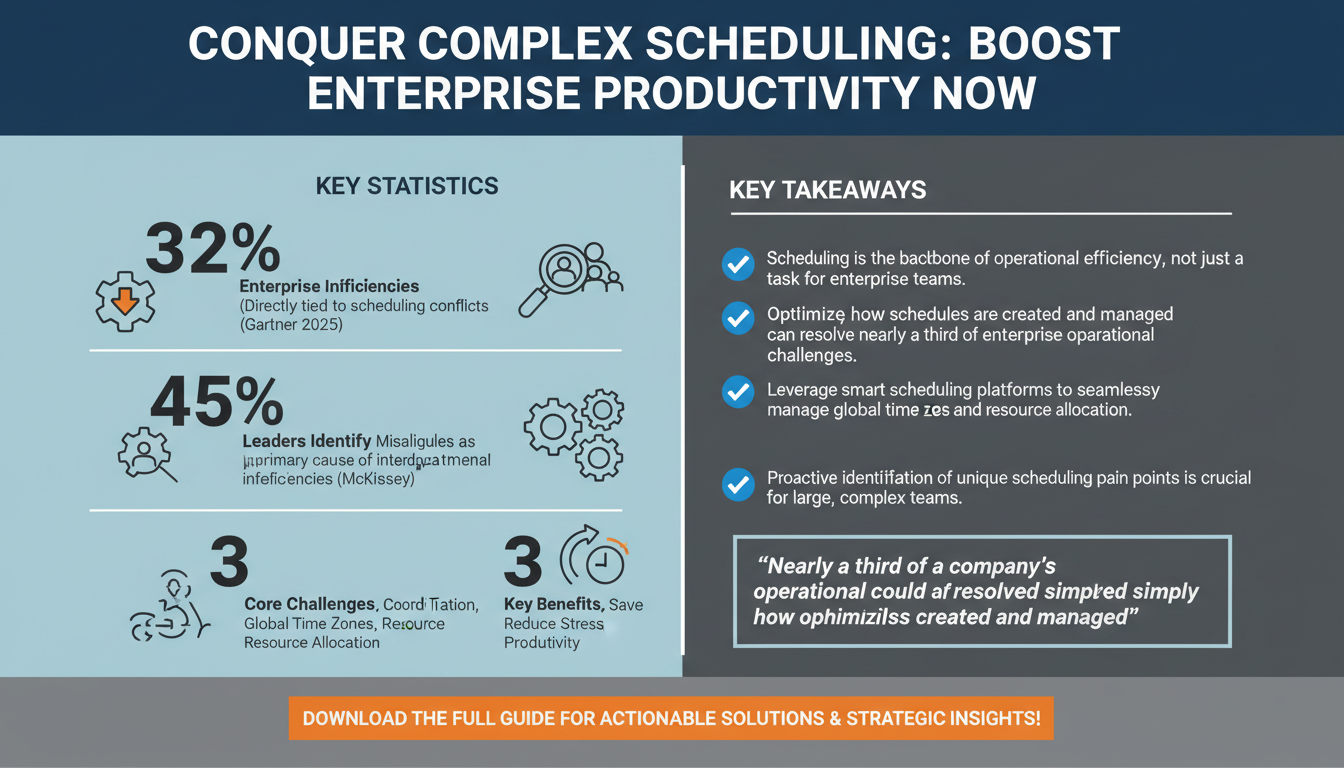
In today’s fast-paced enterprise environment, scheduling isn’t just a task—it’s the backbone of operational efficiency. The larger and more complex a team becomes, the trickier it gets to manage schedules effectively. From coordinating cross-departmental collaborations to handling global time zones and resource constraints, scheduling can quickly become a significant bottleneck if not approached strategically. A poorly managed scheduling system not only leads to missed deadlines and diminished productivity but also exacerbates employee stress and dissatisfaction.
The importance of scheduling can’t be overstated. According to Gartner's 2025 workplace productivity report, 32% of enterprise inefficiencies are directly tied to scheduling conflicts. This means that nearly a third of a company’s operational challenges could be resolved simply by optimizing how schedules are created and managed. Whether you’re leading a team of 50 or managing a multi-national workforce, the stakes are high—but so are the opportunities to improve.
This guide is designed to provide actionable solutions to overcome even the most complex scheduling challenges. From identifying key pain points to leveraging tools like Schedly, we’ll explore proven strategies that can help save time, reduce stress, and ultimately enhance productivity for your entire organization.

Understanding the Core Challenges of Enterprise Scheduling
Enterprise teams face unique scheduling challenges that smaller organizations rarely encounter. These challenges stem from the scale, diversity, and often siloed nature of large teams. Below, we’ll break down the most common obstacles and their impact on business operations:
1. Cross-Team Coordination
Coordinating meetings across different teams and departments is akin to solving a complex puzzle. Every team brings its own workflows, priorities, and deadlines to the table, leading to frequent scheduling conflicts. For instance, while a marketing team might be focused on preparing for a product launch, the engineering team could be occupied with fixing critical bugs. These competing priorities often result in delays, miscommunication, or missed collaboration opportunities.
Expert Insight: A McKinsey study revealed that 45% of enterprise leaders identify misaligned schedules as the primary cause of interdepartmental inefficiencies. This statistic highlights the urgent need for tools and processes that facilitate seamless cross-team collaboration.
2. Global Time Zones
Enterprises with an international presence face an additional layer of complexity: managing global time zones. A meeting scheduled at 9:00 AM for the New York office could mean 11:00 PM for a team member in Tokyo. The lack of tools to effectively accommodate time zone differences often leads to fragmented collaboration, reduced engagement, and even employee dissatisfaction.
Practical Tip: Use scheduling platforms that automatically adjust meeting times based on participants’ time zones. This ensures that meetings are scheduled at mutually convenient times without requiring manual adjustments.
3. Resource and Room Allocation
Scheduling isn’t just about people—it also involves managing physical and digital resources. From booking meeting rooms to securing software licenses, resource conflicts can disrupt workflows and cause delays. This is especially true in hybrid work environments, where both virtual and in-office resources need to be managed effectively.
Real-World Example: Consider a company that frequently double-books its conference rooms due to a lack of centralized scheduling. This not only wastes time but also creates frustration among employees who are left scrambling to find alternative solutions.
Key Takeaway:
- Identify the root causes of scheduling conflicts, such as time zones, resource allocation, or misaligned priorities.
- Implement a unified platform like Schedly to centralize scheduling and resource management, reducing the likelihood of conflicts.

Quantifying the Hidden Costs of Inefficient Scheduling
Scheduling inefficiencies aren’t just minor inconveniences—they can have substantial financial and operational repercussions. A Forrester report found that large enterprises lose an average of $2.1 million annually due to mismanaged schedules. Let’s explore some of these hidden costs in greater detail:
1. Employee Burnout
Back-to-back meetings, lack of clarity, and unpredictable schedules significantly contribute to employee burnout. According to Harvard Business Review, 68% of employees attribute their workplace stress to poor meeting management. Over time, this not only affects morale but also leads to higher rates of absenteeism and turnover.
2. Missed Deadlines and Project Delays
Scheduling conflicts often result in missed deadlines, especially for projects involving multiple teams. For example, if critical input from one team isn’t available on time, the entire project timeline can be thrown off course. This can have a cascading effect, delaying product launches or client deliverables.
3. Damaged Client Relationships
Clients expect timely responses and seamless communication. A missed client meeting or delayed delivery due to internal scheduling chaos can erode trust and damage long-term relationships. In competitive industries, such lapses can result in lost clients and revenue.
Key Takeaway: Quantify the costs of scheduling inefficiencies—both financial and emotional—to build a compelling case for investing in better tools and processes.

Proven Strategies to Streamline Scheduling
Addressing scheduling challenges requires a combination of strategic planning, technology, and clear communication. Below are actionable solutions that can help:
1. Centralize Scheduling with a Single Platform
One of the most effective ways to eliminate scheduling silos is by using a centralized platform that integrates calendars, resource management, and time zone adjustments. Tools like Schedly offer comprehensive solutions tailored for enterprise teams.
2. Implement Buffer Times
Adding buffer times between meetings can prevent employees from feeling overwhelmed by back-to-back schedules. It also provides breathing room for preparation and follow-ups, leading to more productive meetings.
3. Automate Recurring Meetings
Automation is a game-changer for enterprise scheduling. By automating recurring meetings and reminders, you can save significant time and reduce the risk of human error. For example, weekly standups or monthly reviews can be scheduled automatically, ensuring consistency and efficiency.
Key Takeaway: Leverage automation to eliminate repetitive tasks and free up time for more strategic activities.

Introducing the "SMART Scheduling Framework"
The "SMART Scheduling Framework" is a methodical approach to simplify complex scheduling challenges:
- Simplify: Streamline processes using a unified tool.
- Measure: Track key metrics like attendance rates and meeting durations to identify inefficiencies.
- Automate: Use AI-powered tools to handle repetitive tasks.
- Resource: Allocate resources effectively to avoid conflicts and overlaps.
- Time-Zone Adapt: Adopt tools that automatically adjust for global teams.
Key Takeaway: Implement the SMART framework to address scheduling challenges systematically and improve overall efficiency.

Conclusion
Complex scheduling challenges in enterprise teams may seem daunting, but with the right strategies and tools, they can be overcome. By understanding the root causes, implementing proven solutions like automation, and adopting frameworks like SMART, you can transform scheduling from a pain point into a competitive advantage. Platforms like Schedly empower teams to centralize, automate, and streamline their scheduling processes, enhancing productivity and morale.
Don’t let inefficiencies hold your team back. Start implementing these strategies today to unlock your organization’s full potential.