
Schedly resources
Time Saving Scheduling: Bake Efficiency Into Every Booking

Your administrative team is drowning in scheduling tasks. Phone calls, emails, back-and-forth messages, and manual calendar updates consume hours every week that could go toward growing your business.
Time-saving scheduling systems eliminate this waste. At Schedly, we've seen businesses reclaim 10+ hours weekly by automating their booking process, freeing staff to focus on what actually drives revenue.
How Much Time Manual Scheduling Actually Costs
The Hidden Cost of Context-Switching
Your staff answers phones and responds to emails about scheduling, but that's only the surface. They context-switch between multiple communication channels, check overlapping calendars, manually confirm appointments, and fix mistakes from double-bookings that slipped through the cracks. Research shows the average employee experiences 56 interruptions per day, and scheduling chaos accounts for a significant chunk of that. When someone pauses their work to handle a booking request, respond to a cancellation, or track down availability across team members, they lose focus. Studies on context-switching show it takes an average of 23 minutes to regain full concentration after an interruption. A business with just three administrative staff members handling scheduling loses 100+ hours per month to these scattered tasks.
Where Communication Breaks Down
Back-and-forth communication between clients and staff creates delays that frustrate customers and increase no-show rates. A client who cannot book online at midnight because your office is closed, then waits for an email response the next morning, arrives already annoyed. Overbooking happens because scheduling information lives in multiple places-someone's email, a shared calendar that wasn't updated, a notebook by the phone. One stylist double-booked and had two clients arrive simultaneously, damaging trust that took months to rebuild. These failures compound quickly and damage the reputation you've worked hard to build.
The Direct Impact on Your Bottom Line
In foodservice environments, labour costs typically account for 25–35% of total operating costs, so every wasted hour of administrative work directly cuts into margins. A bakery owner spending five hours weekly on scheduling emails pays someone to do work that software could handle in seconds. The cost isn't just the wages for those hours-it's the lost revenue from staff not focused on client service, sales, or production (and the opportunity cost of what they could accomplish instead). Manual scheduling doesn't just slow you down. It actively undermines the experience you're trying to deliver, which means your next step is clear: automated systems eliminate this waste entirely.
What Automated Scheduling Actually Eliminates
Online Booking Stops the Phone Calls
Clients book directly on your scheduling page at 11 PM on a Sunday instead of calling during business hours or sending emails hoping for a response. Your team doesn't answer the phone. No back-and-forth negotiation happens. The appointment lands in your system instantly, correctly placed in the only available slot, with zero chance of double-booking because the system sees real-time availability across your entire team. One salon owner reclaimed 8 hours weekly simply by moving bookings online. Administrative staff stopped checking voicemails between clients and typing up appointment details from scribbled notes. The client provides their information once, the system captures it, and your team focuses on delivering the service instead of managing the logistics.
Automated Confirmations Slash No-Show Rates
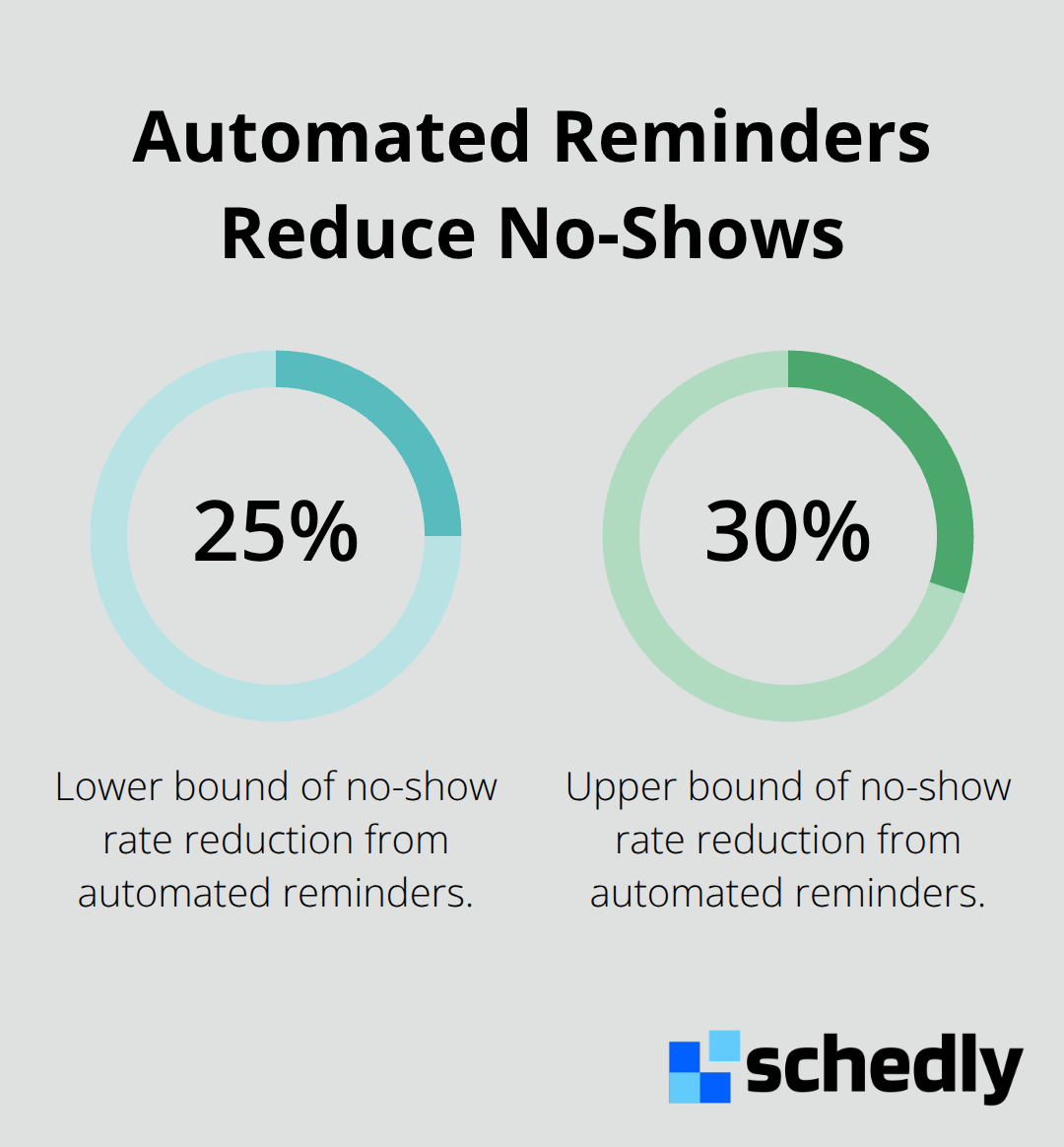
Clients see their appointment details immediately after booking and receive SMS or email reminders before their appointment arrives. No-shows destroy productivity. A therapist with four cancelled appointments loses four billable hours and can't fill those slots last-minute.
Workflow Automation Eliminates Routine Tasks
Sending confirmations, generating invoices, updating calendars, and moving appointment data into your CRM execute instantly and accurately without human intervention. AI automation typically saves small businesses 8–15 hours per week by eliminating repetitive tasks. Your staff moves from administrative work into client-facing roles where they actually generate value. The difference between manual and automated scheduling is stark: your team spends half their day on tasks software should handle, or they spend their time on work that only humans can do well.
The time your business reclaims from scheduling automation creates space for something more important. That space is where real growth happens, and the next section shows exactly how different industries use that reclaimed time to transform their operations.
How Different Industries Reclaim Hours Weekly
Real Estate: Closing Deals Instead of Managing Calendars
Real estate agents operate in a market where availability visibility determines deal velocity. When a property agent uses automated scheduling, clients book showings at times that work for their calendar, not the agent's office hours. Instead of playing phone tag across multiple client requests, agents see all availability in one place and confirm showings instantly. This eliminates the administrative bottleneck that traditionally slows down deal progression. A real estate team managing 15 active listings previously spent 6–8 hours weekly coordinating showing times across clients, agents, and property managers. Automated scheduling compressed this to less than an hour, freeing agents to focus on negotiation, market analysis, and closing deals rather than calendar management.
Salons: Eliminating Double-bookings and Maximizing Chair Time
Salons face a different but equally costly problem: scheduling conflicts that damage client relationships and reduce revenue per chair. When stylists manage their own bookings through text messages, emails, or walk-ins, double-bookings happen regularly. A salon with five stylists previously experienced double-bookings, forcing stylists to rush clients or disappoint others who arrived expecting service. The administrative staff spent time fixing these conflicts and managing cancellations. Switching to an automated system eliminated double-bookings entirely because clients see real-time availability and book only open slots. Client throughput increased simply because stylists spent zero time resolving scheduling conflicts and could focus entirely on delivering service. No more clients waited while staff figured out who was actually booked in which chair.
Healthcare: Shifting Staff From Administration to Patient Care
Healthcare practices operate under different constraints but face identical time-drain problems. Patient scheduling traditionally involved front desk staff managing phone calls, checking provider availability across multiple systems, and manually confirming appointments. A mid-sized practice with three providers and one front desk person spent 7–9 hours weekly on scheduling administration alone. Patients called to check availability, staff searched calendars, confirmations happened through phone calls, and no-shows disrupted the entire daily schedule. Automated scheduling allowed patients to book online 24/7, receive SMS reminders before appointments, and self-reschedule if needed. The front desk staff shifted from scheduling administration to patient intake and insurance verification, tasks that actually require human judgment. No-show rates dropped, which meant the practice recovered revenue from previously empty appointment slots and reduced the administrative chaos that came with last-minute cancellations.
Final Thoughts
The pattern is clear across every industry we've examined. Businesses that automate their time-saving scheduling reclaim 8–15 hours weekly, and those hours flow directly to revenue-generating work. Real estate agents close more deals. Salons maximize chair time. Healthcare practices shift staff from administrative tasks to patient care. The competitive advantage goes to companies that implement systems that work 24/7, eliminate double-bookings, and free staff to focus on what actually matters.
Profitability improves because your team stops spending money on work that software handles better. A bakery owner paying someone $20 per hour to manage scheduling emails loses $100 weekly on a task that takes seconds to automate. Customer satisfaction improves because clients get what they want-instant booking, confirmation, and reminders-without waiting for your team to respond. No-show rates drop, scheduling conflicts disappear, and your reputation strengthens because you deliver reliability instead of chaos.
Implementation doesn't require months of planning, and most businesses see measurable results within weeks. Schedly provides the infrastructure you need with 24/7 online booking, automated confirmations, workflow automation, and analytics to track your time savings. Your team starts reclaiming hours immediately, and those hours compound into real business growth.