
Schedly resources
Tutoring Scheduling Software: Tailored Timelines for Student Success
Tutoring centers face a constant challenge: keeping students on track while managing complex schedules across multiple tutors and time zones. When scheduling falls apart, so does consistency-and consistency is what drives real learning outcomes.
At Schedly, we've seen firsthand how the right tutoring scheduling software transforms operations. This guide walks you through the features and strategies that help tutoring centers eliminate conflicts, reduce no-shows, and give students the predictable study sessions they need to succeed.
Why Consistent Scheduling Drives Real Student Progress
The Learning Science Behind Predictable Sessions
Inconsistent tutoring schedules sabotage learning outcomes, plain and simple. When students attend lessons sporadically or at unpredictable times, their brains struggle to retain material. Research shows that spacing out study sessions over consistent intervals produces better long-term retention than cramming, yet many tutoring centers still rely on email chains and spreadsheets to coordinate sessions. The private tutoring market is forecast to rise from USD 91.65 billion in 2022 to USD 154.8 billion by 2030, driven largely by online tutoring platforms that enable reliable, repeatable scheduling. Students and parents increasingly expect self-service booking and automated confirmations, not back-and-forth emails.
How Automation Cuts Through Administrative Chaos
When tutoring software automates the booking process and sends reminders, attendance improves measurably. Automated reminders reduce no-shows significantly because they keep sessions top-of-mind. A 24-hour reminder nudges students to prepare mentally and logistically, while a second reminder 2 hours before the session catches last-minute conflicts. Without automation, tutors spend hours chasing confirmations and rescheduling dropped sessions. That administrative drain pulls tutors away from what they do best: teaching.
Manual weekly rebooking costs tutoring businesses as much as USD 640 per month in labor alone (calculated at 8 hours per week at USD 20 per hour). That money could fund additional tutors or student support instead. Scheduling software that integrates attendance tracking with billing and progress notes creates a closed loop where every session feeds actionable insights.
Turning Data Into Personalized Learning Paths
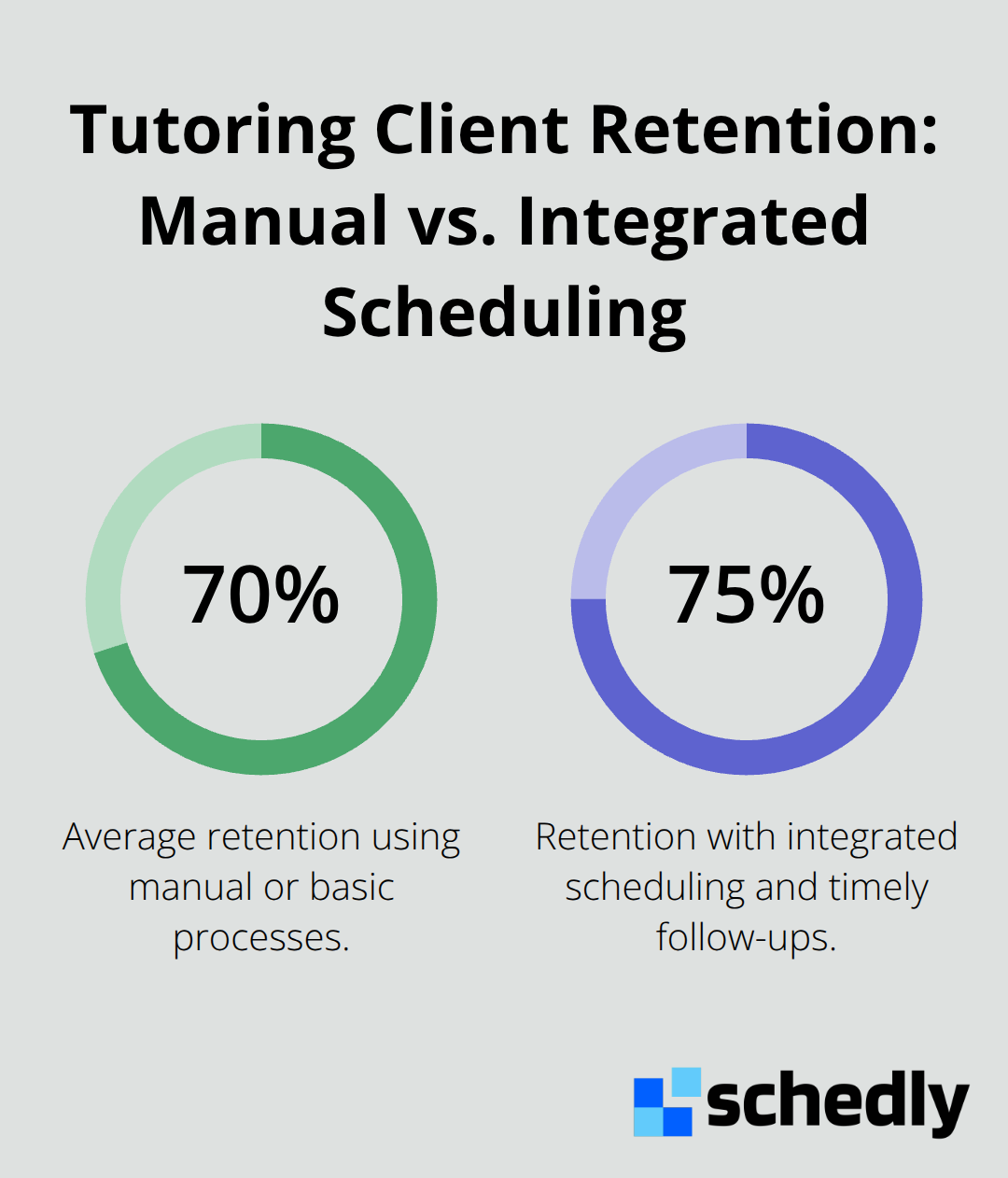
When a student misses a session, the system flags it immediately so tutors can adjust pacing or topics. When a student attends consistently, the tutor sees momentum and can increase complexity or depth. This feedback mechanism turns weekly sessions into a tailored progression rather than isolated lessons. Tutoring client retention sits around 70 percent overall, but platforms with integrated scheduling and timely follow-ups push retention near 75 percent. That 5-point difference translates directly to revenue stability and student outcomes.
Centers that use conflict detection and drag-and-drop scheduling report dramatic reductions in double-bookings and last-minute scrambles. Real-time insights into attendance patterns let tutors adjust session cadence, topics, and milestones as students advance (transforming generic tutoring into personalized learning timelines). The shift from reactive rescheduling to proactive, data-informed planning separates tutoring centers that scale from those that plateau.
These operational wins set the stage for the next challenge: selecting the right features that actually move the needle on student success and tutor efficiency.
What Makes a Scheduling Platform Actually Work for Tutoring
Self-service booking Converts Prospects Into Students
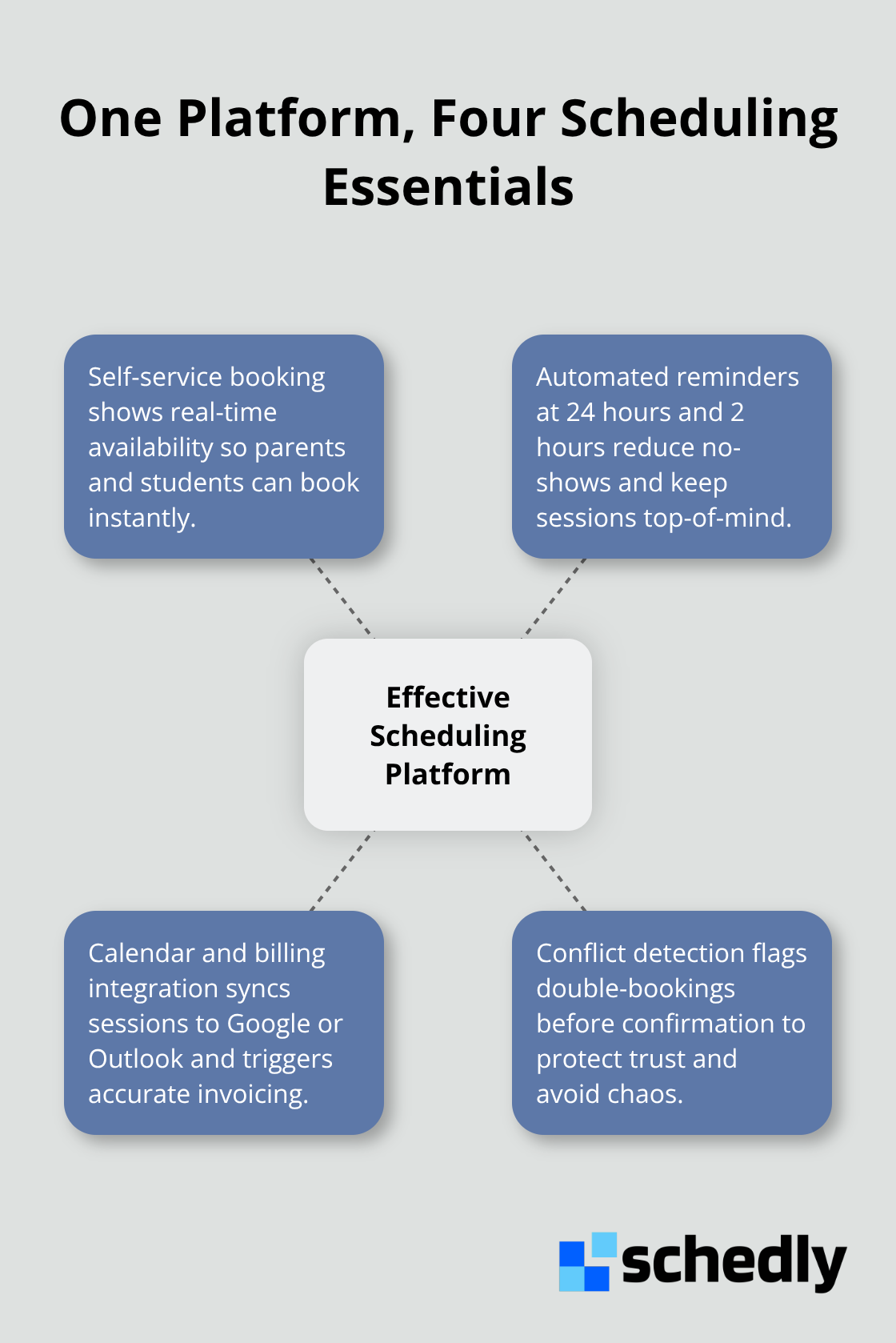
Self-service booking removes the friction that kills conversions. When parents and students log into a scheduling page and see available time slots instantly, they book on the spot instead of waiting for email responses. This immediacy matters because consumer behavior research shows that people who encounter friction during booking abandon the process at high rates. A platform that syncs with your tutor calendars in real time prevents the embarrassment of confirming a slot that's already taken, which erodes trust fast.
Reminders Keep Students Accountable and Engaged
Automated reminders sent 24 hours before a session and again 2 hours prior keep sessions top-of-mind and reduce no-shows substantially. Without these touchpoints, students forget or deprioritize lessons, especially younger learners who rely on parents to manage their schedules. The reminders also signal professionalism and care, reinforcing your tutoring center's commitment to each student's progress.
Integration Eliminates Manual Data Entry and Errors
Integrated scheduling platforms eliminate the chaos of managing multiple platforms. When a student books through your scheduling page, that session automatically populates on your tutor's Google Calendar or Outlook, and a confirmation email reaches both parent and tutor simultaneously. No copy-pasting. No missed updates. No tutor showing up to a lesson the student cancelled three days ago.
This integration also feeds attendance data directly into billing, so invoices generate automatically the moment a session is marked complete. Centers using integrated platforms report substantial reductions in administrative overhead and improvements in payment processing. That efficiency gain translates to more time tutors spend teaching and less time chasing paperwork.
Conflict Detection Prevents Scheduling Disasters
Platforms with conflict detection built in flag double-bookings instantly, preventing the scramble of reshuffling tutors mid-week. The best tutoring scheduling software treats booking, attendance, reminders, and billing as one interconnected system rather than separate tools you stitch together yourself.
Scaling Across Multiple Tutors Without the Chaos
When a tutoring center adds a second tutor, the scheduling complexity doesn't double-it explodes. A solo tutor manages one calendar and a handful of weekly students. Two tutors require coordinating different availability windows, subject expertise, and student preferences across overlapping time slots. Three tutors bring room conflicts, tutor-switching preferences, and the nightmare of tracking who taught what to whom.
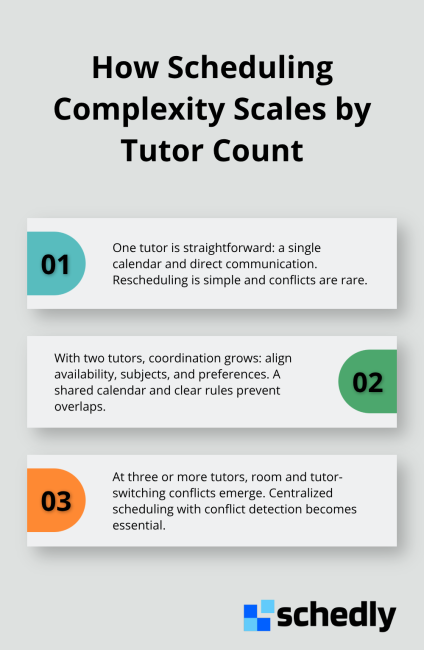
Centers that rely on spreadsheets or email threads spend significant time just confirming availability and preventing double-bookings. That time never reaches students. Scheduling software built for tutoring eliminates this chaos by treating multiple tutors as a unified resource pool. When a student books a lesson, the system checks all available tutors simultaneously, filters by subject and experience level, and presents the parent with genuine open slots. No conflicts. No false confirmations.
Real-time calendar updates Transform Scheduling
The platform flags scheduling collisions instantly, so a tutor never arrives to a lesson that's already been reassigned. Centers managing five or more tutors see the biggest ROI because the labor savings compound. A mid-sized center with 20 tutors and 500 students typically takes 2 to 4 weeks to migrate from spreadsheets to integrated software, but the payoff arrives immediately. Tutors reclaim significant time per week that previously went to scheduling coordination alone.
Attendance Data Reveals What Actually Works
Real progress tracking starts with attendance records that feed directly into billing and progress notes. When a student attends consistently, the tutor can see the pattern and adjust pacing upward. When a student misses sessions, the system flags the gap so the tutor can reach out proactively instead of letting momentum die. Centers using attendance-linked platforms report substantial reductions in admin time within the first quarter and improvements in on-time payment rates because invoices generate automatically after each completed session.
The data also reveals capacity problems before they become crises. If your platform shows that Tuesday afternoons are fully booked for six weeks straight, you know to hire another tutor or adjust pricing to manage demand. Without this visibility, centers either turn away students or overcommit tutors and watch quality collapse. A student who attends every Thursday at 4 PM for eight weeks straight reaches their learning goal far more reliably than one who books sporadically. Tutoring centers that track this consistency can adjust session cadence and content difficulty based on real data, not intuition.
AI teaching tools and Smart Scheduling
Double-bookings destroy trust faster than almost anything else. A student shows up to a lesson only to find the tutor is teaching someone else. A tutor agrees to cover an extra session, then realizes the time overlaps with an existing commitment. These conflicts cascade through the week and waste everyone's time. Conflict detection prevents this by checking tutor availability against the entire booking calendar before confirming any session.
The best platforms allow tutors to block personal time, mark unavailable days for holidays or professional development, and set maximum students per time slot to prevent overcommitment. When a tutor needs to swap a session or take time off, the system updates automatically and notifies affected families without manual intervention. This safeguard preserves the tutor's mental health and prevents burnout that comes from constant last-minute scrambling. Tutors stay longer and teach with more energy when scheduling software handles the logistical burden.
The operational stability also improves billing accuracy because attendance records remain clean and disputes about who taught what session become impossible. A tutoring center operating with reliable scheduling can confidently quote timelines to parents because the system guarantees consistent session delivery.
Final Thoughts
Tutoring scheduling software transforms how centers operate by eliminating the administrative burden that pulls tutors away from teaching. Centers that implement reliable scheduling systems see immediate gains: tutors reclaim hours each week, students attend more consistently, and billing errors drop sharply. A tutor who previously spent 8 hours per week on manual coordination suddenly has that time back for lesson prep and student feedback, while a student who books a lesson in 30 seconds instead of waiting for email responses shows up more reliably.
The long-term payoff extends beyond operational efficiency to revenue stability and tutor retention. Tutoring centers that track attendance patterns and adjust session cadence report retention rates near 75 percent, compared to 70 percent for centers relying on manual processes. That 5-point difference compounds across dozens of students and months of engagement, and invoices that generate automatically after each session eliminate late payments and disputes that drain cash flow.
The shift from reactive scheduling to proactive, data-informed planning separates centers that scale from those that plateau. Look for software that combines online booking, automated reminders, calendar integration, and attendance-linked billing in one system rather than patchwork setups that force manual data syncing across multiple tools. Schedly automates the booking process with 24/7 online scheduling, integrates with Google Calendar and Zoom, processes payments securely, and provides analytics to track what's working.