
Schedly resources
Tutoring Session Scheduling: Boost Efficiency For Educators

Tutoring session scheduling is one of the biggest time drains for independent educators. Most tutors still rely on email chains, spreadsheets, or fragmented calendar systems that create scheduling conflicts and administrative chaos.
At Schedly, we've seen firsthand how this inefficiency costs tutors thousands of dollars annually in missed sessions and lost productivity. The good news is that modern scheduling software can transform how you operate your tutoring business.
The Real Cost of Disorganized Tutoring Schedules
How Manual Systems Create Scheduling Chaos
Manual scheduling systems drain thousands of dollars from tutoring operations every year. When tutors manage bookings through email, spreadsheets, or basic calendar apps, they lose control of their schedule almost immediately. Double bookings happen regularly because no centralized system prevents conflicts. A student books a session via email on Monday, another books through a text message on Tuesday, and the tutor realizes two students occupy the same time slot by Wednesday. That missed session represents a disappointed student and lost revenue that can't be recovered. Independent tutors report spending 5 to 10 hours per week on scheduling logistics alone-time that should go toward lesson preparation, grading, or actual teaching. Follow-up emails, payment reminders, and rescheduling requests pile up without a system to manage them efficiently, compounding the administrative burden.
The Hidden Cost of No-Shows
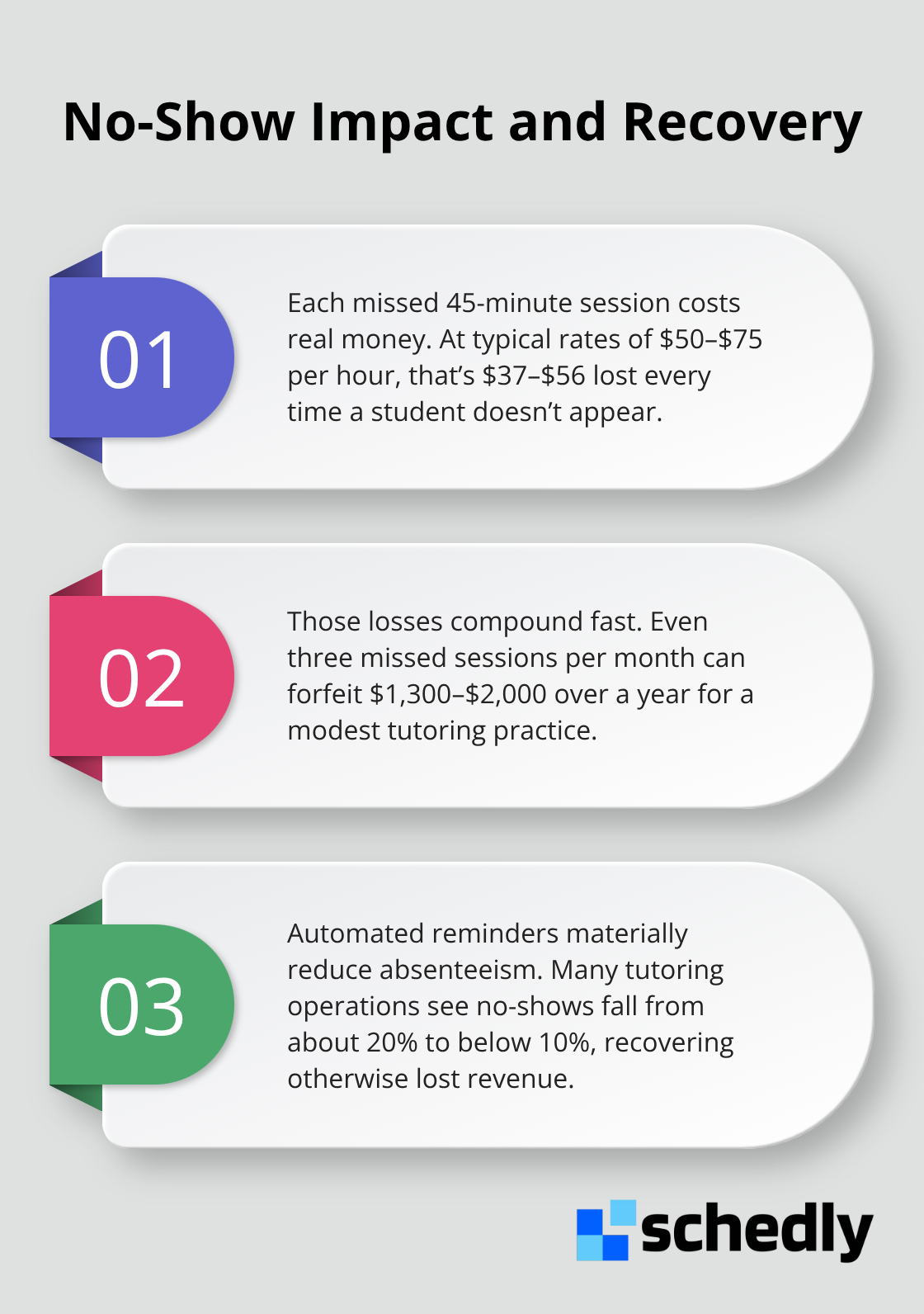
No-shows represent one of the largest hidden costs in tutoring businesses. Automated reminders reduce no-shows significantly, dropping absenteeism from 20% to below 10% for many centers. When a student doesn't show up, that time slot vanishes permanently, and the tutor has already blocked it from other potential clients. A 45-minute session lost to a no-show at a typical tutoring rate of $50 to $75 per hour means $37 to $56 in unrealized income per absence. Over a year, even a modest tutoring practice losing just three sessions per month to no-shows forfeits $1,300 to $2,000 in annual revenue.
How Disorganization Damages Student Relationships
Poor organization damages student relationships directly. Sessions that get rescheduled repeatedly because of scheduling errors erode student confidence in the tutor's professionalism and reliability. Parents who manage multiple children's activities need predictable, consistent scheduling. If your tutoring business can't provide that, they switch to a competitor who uses proper scheduling tools. The friction of disorganized communication frustrates students and parents before any tutoring even happens, creating a negative first impression that's difficult to recover from.
This reality explains why forward-thinking tutors now turn to automated scheduling solutions that eliminate these problems at their source. The right software doesn't just organize your calendar-it transforms how you operate.
How Modern Scheduling Software Eliminates the Chaos
A Centralized System Prevents Double Bookings
Modern scheduling software eliminates the administrative friction that drains tutoring businesses. When you move from email and spreadsheets to a dedicated scheduling platform, the impact is immediate and measurable. A centralized system creates a single source of truth for all bookings, preventing double-booking disasters. Students book sessions through a branded online portal available 24/7, and the system automatically blocks that time slot across all channels simultaneously. No more conflicting bookings via email, text, and phone calls happen in parallel. The tutor sees real-time availability updates and never accidentally commits to two students in the same hour.
Automated Reminders Recover Lost Revenue
Automated reminders sent via email and text before each session help reduce no-shows. That single improvement recovers thousands of dollars annually for a modest tutoring practice. When a student doesn't show up, that time slot vanishes permanently, and the tutor has already blocked it from other potential clients. A 45-minute session lost to a no-show at a typical tutoring rate of $50 to $75 per hour means $37 to $56 in unrealized income per absence. Over a year, even a modest tutoring practice losing just three sessions per month to no-shows forfeits $1,300 to $2,000 in annual revenue. Automated reminders eliminate this waste.
Payment Processing Becomes Automatic
Payment processing becomes automatic too. When a student books a session, they can pay immediately through Stripe, PayPal, or Square integration, eliminating payment chasing and late invoices. The tutor receives confirmed payment before the session occurs, not weeks later through follow-up requests. Administrative tasks that once consumed 5 to 10 hours per week shrink to minutes. Calendar synchronization with Google Calendar means the tutor's personal schedule, tutoring sessions, and other commitments stay perfectly aligned without manual effort. The system handles rescheduling automatically when students need to shift their session times, updating all parties instantly instead of triggering email chains.
Data Reveals Hidden Business Patterns
For tutors managing multiple students or those scaling their practice, scheduling software becomes non-negotiable. The data these platforms capture reveals patterns tutors miss in spreadsheets: which time slots fill fastest, which students have the highest attendance rates, how much revenue comes from each tutoring block. This information guides smarter business decisions. You learn which sessions to prioritize, which students to nurture, and where to add capacity. A tutor who once spent Monday mornings managing the week's scheduling chaos now spends that time preparing better lessons or reaching out to prospective students. The shift from reactive firefighting to proactive business management transforms not just efficiency but profitability.
Integration Features Support Online and In-Person Tutoring
Scheduling platforms designed for education include features that support both online and in-person delivery. Zoom integration enables seamless online tutoring with automatic meeting links sent in notifications. Intake forms collect student information upfront, and dedicated student profiles carry forward between sessions, ensuring continuity and personalization. These capabilities matter because tutors increasingly blend online and in-person sessions to meet student needs and maximize their own availability. The right platform adapts to how you actually work, not the other way around. As you scale your tutoring practice and add more students, you'll need systems that handle complexity without adding more work.
Getting Your Scheduling Foundation Right
Define Your Availability and Protect Your Prep Time
Setting clear availability windows separates thriving tutoring practices from chaotic ones. You need to specify exactly when you work and build buffer time between sessions so you can prepare lessons, grade assignments, and recover mentally. A 30-minute buffer between back-to-back sessions is the minimum; 45 minutes works better if your schedule allows. This isn't a luxury-it's operational necessity. When you run sessions directly into each other, quality drops, students notice, and your energy depletes. The National Student Support Accelerator at Stanford recommends scheduling tutoring sessions at least three times per week, with 30–60 minutes per session for a minimum of 10 weeks. This frequency matters because consistency builds the student-tutor relationship that drives actual learning gains.
Your scheduling software should let you block out prep time, lunch, and personal commitments just like student sessions, so nothing gets double-booked. The availability settings let you specify your working hours, black out dates, and set automatic buffer periods between appointments. This prevents students from booking sessions during your lunch break or back-to-back with no transition time.
Reduce No-Shows With Automated Reminders
Automated reminders are non-negotiable if you want to recover lost revenue from no-shows. Automated reminders reduce no-shows and improve attendance for tutoring centers. That's the difference between losing significant revenue annually in a modest practice versus keeping that money. Your scheduling platform should send reminders via email and text 24 hours before each session, then a second reminder two hours before.
Make these reminders include the session link for online tutoring or the location details for in-person work. Personalization matters-include the student's name and what you'll work on that day. This transforms a generic reminder into a helpful nudge that shows you're organized and professional.
Use Data to Optimize Your Schedule
Tracking your session data reveals which time slots students actually keep and which ones sit empty. A tutoring center that monitors attendance patterns discovers that Tuesday afternoons fill faster than Wednesday mornings, or that 6 PM sessions have higher no-show rates than 4 PM sessions. You can then adjust your pricing, promotional efforts, or available slots based on real demand. This data-driven approach beats guessing.
The analytics dashboard in modern scheduling software shows you attendance rates, revenue per time slot, and student retention patterns. Armed with this information, you make smarter decisions about whether to add more capacity at peak times or shift your availability to match actual demand. Tutors who ignore this data leave money on the table and waste effort promoting time slots nobody wants. The patterns you uncover (which students book consistently, which sessions fill fastest, how much revenue comes from each tutoring block) guide smarter business decisions about where to invest your time and marketing effort.
Final Thoughts
The shift from manual scheduling to automated systems separates tutoring educators who compete effectively from those who fall behind. Tutoring session scheduling has consumed thousands of hours and thousands of dollars from independent tutors who stuck with email and spreadsheets, yet the financial case for change is straightforward: recover just three no-shows per month through automated reminders, and you gain $1,300 to $2,000 annually. Add the 5 to 10 hours per week you reclaim from administrative work, and the return becomes undeniable.
Modern scheduling software transforms tutoring operations by eliminating friction that drains your energy and revenue. A centralized system prevents double bookings, automated reminders recover lost sessions, and payment processing happens instantly instead of through endless follow-up requests. Your students experience professionalism and reliability from the moment they book, building confidence before the first lesson even starts, while the data these platforms capture reveals which time slots fill fastest, which students attend consistently, and where your revenue actually comes from.
The investment in automation pays off through time and revenue gains that compound over months and years. You spend less time managing chaos and more time preparing better lessons, reaching prospective students, or maintaining your own wellbeing. Schedly offers a scheduling platform built for education that handles 24/7 online booking, secure payments, automated reminders, and analytics to track your performance.