
Schedly resources
Why Clients Book With Your Competitors Instead
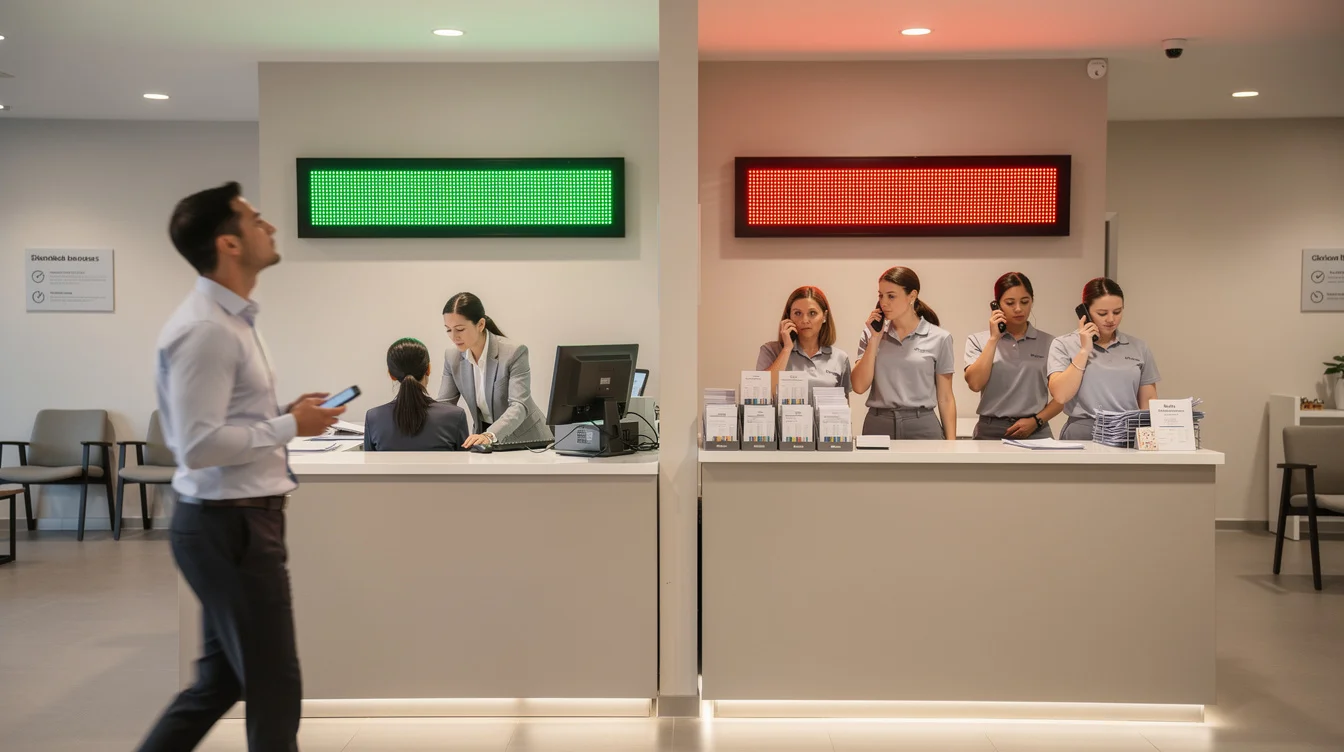
Your booking system is often the first real interaction potential clients have with your business. If your website is hard to navigate, your pricing unclear, or your team's availability visibility poor, clients simply move to a competitor who makes booking easier.
At Schedly, we've seen this pattern repeatedly. The businesses losing clients aren't always the ones with worse services-they're the ones with worse booking experiences.
Why Clients Leave for Your Competitors
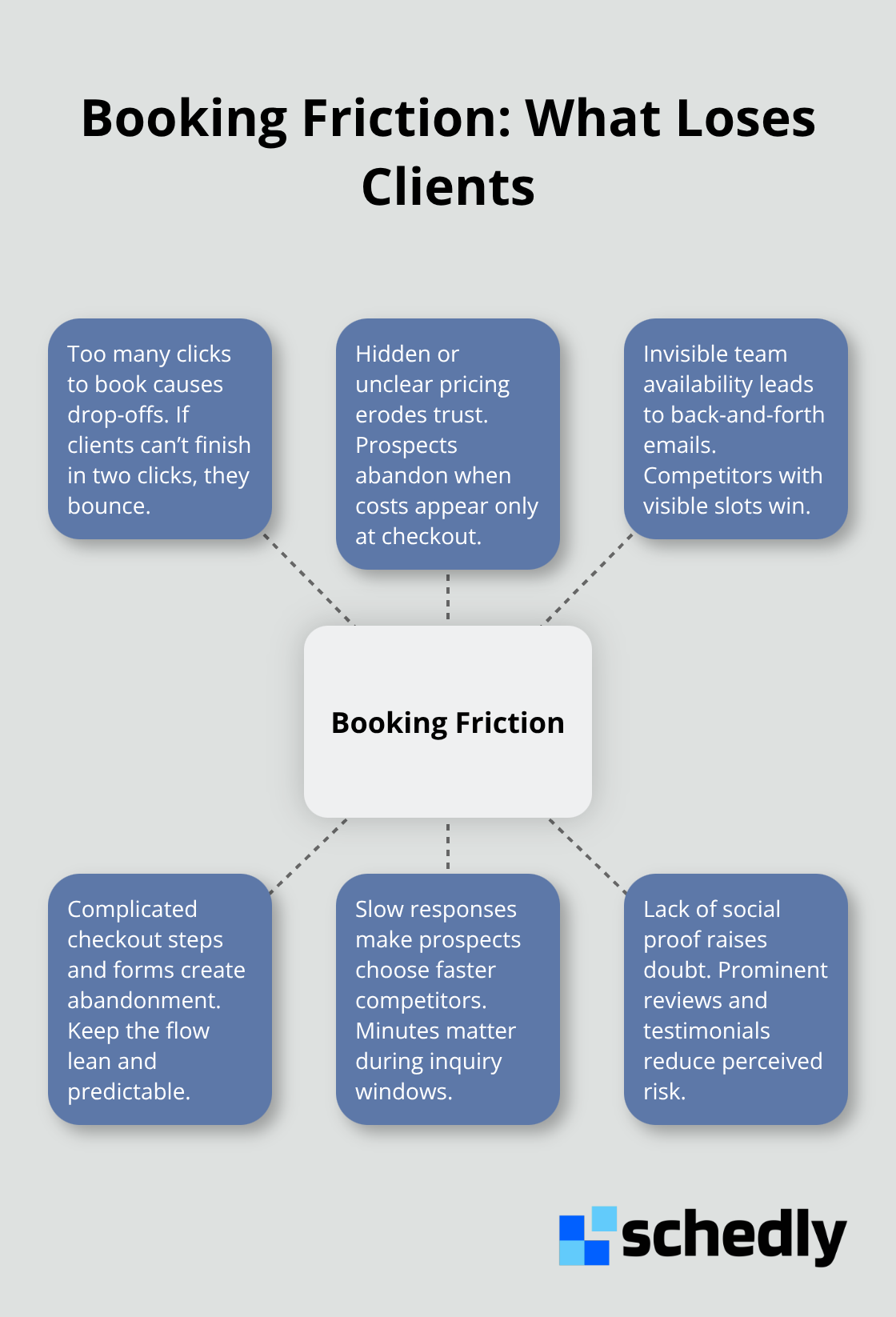
Convenience drives client decisions more than price or brand loyalty alone, according to research by Shep Hyken. When a potential client lands on your website and cannot book an appointment within two clicks, they leave. When your pricing stays hidden behind contact forms or phone calls, they move on. When your team's availability remains invisible or requires back-and-forth emails to confirm, competitors win. The friction in your booking experience directly translates to lost revenue.
Your Website Stops Clients Before They Decide
A confusing website kills bookings. If clients cannot quickly understand what you offer, find your availability, or see your pricing, they will not waste time figuring it out. Many service businesses still hide their pricing behind phone numbers or contact forms, forcing potential clients to make a call before they even know the cost. This friction alone causes abandonment.
Social proof matters equally-clients want to know what others experienced with you. Without visible reviews, testimonials, or ratings on your website and Google Business Profile, potential clients assume you have something to hide. Shep Hyken's research shows that reputation heavily influences decisions, with customers relying on others' experiences and online reviews to guide their choices. If your competitors display five-star reviews and client testimonials while you display none, the choice becomes obvious.
Your website must clearly display what you offer, how much it costs, when you are available, and what past clients thought of your service. Anything less sends clients to competitors.
The Booking Process Itself Defeats You
Even businesses with decent websites lose clients during the actual booking step. A complicated scheduling process with too many form fields, unclear time slots, or confusing payment steps creates abandonment. Clients expect to book within seconds, not minutes. If your system requires them to select a service, then a staff member, then a date, then a time, then fill out a lengthy intake form before they see the price, you have already lost them.
Hidden fees discovered during checkout destroy conversions. Clients must know the total cost before they commit. Slow response times to inquiries compound the problem-if a client calls or emails and waits for a reply, competitors with faster communication win. Shep Hyken's research emphasizes that outstanding customer service drives loyalty and repeat business. Your competitors likely respond within minutes. You need to match that speed or exceed it.
Speed and Transparency Separate Winners From Losers
The businesses that retain clients excel at two things: they respond fast, and they hide nothing. A potential client who receives a confirmation within fifteen minutes feels valued. A client who sees all costs upfront (including any fees or add-ons) trusts you more than a competitor who reveals surprises at checkout. These small details accumulate into a reputation for reliability and respect for the client's time.
Your booking experience determines whether clients ever reach the point where your actual service quality matters. Fix the friction first, and you create the opportunity to impress them with your work.
Where Your Booking System Fails Most
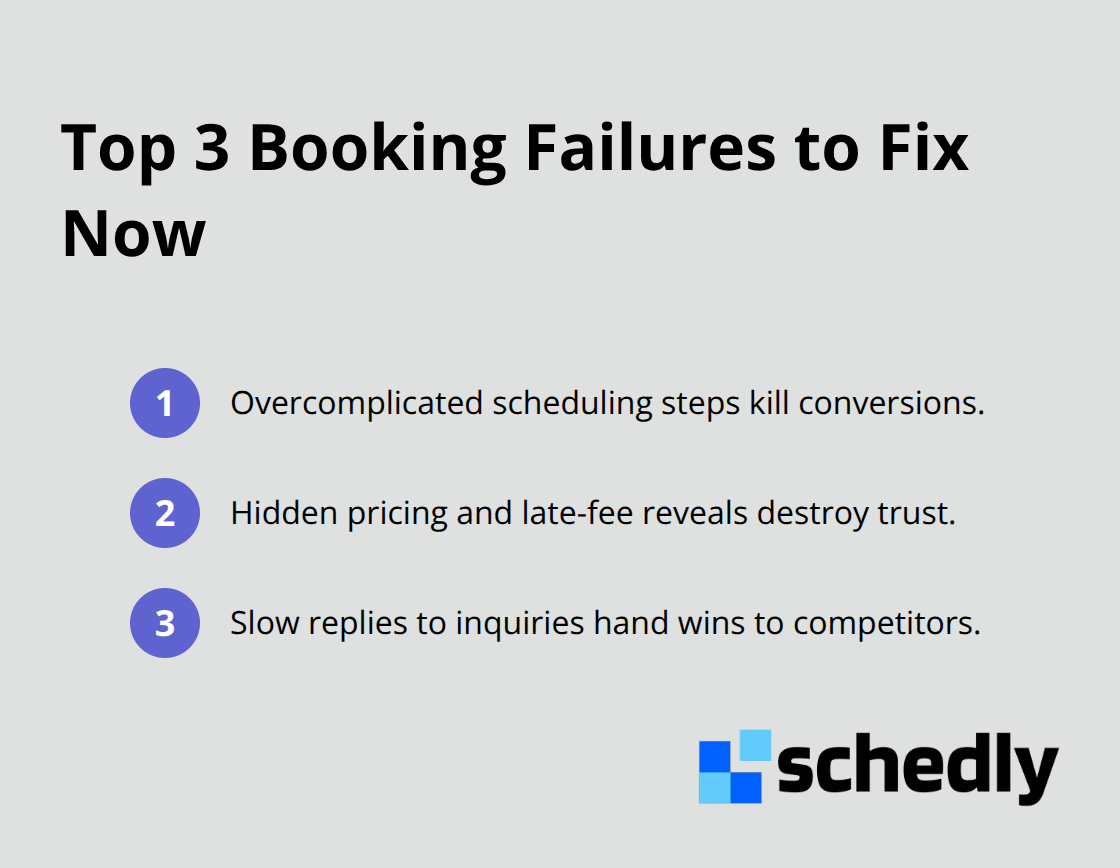
Most service businesses repeat the same three mistakes, and they cost thousands in lost revenue every month. These failures compound each other, creating a booking experience that sends clients straight to competitors. Understanding where you go wrong is the first step toward fixing it.
Overcomplicating the Scheduling Process
A client who wants to book a 30-minute consultation should complete that action in under 60 seconds. Instead, many businesses force clients to navigate multiple pages, select from dropdown menus with unclear options, answer unnecessary questions before seeing availability, and fill out lengthy forms that feel more like medical intake paperwork than a simple appointment request.
Each additional step reduces conversion rates significantly. Research shows that adding just one extra form field cuts completion rates by 3–5%, meaning a five-field form loses 15–25% of potential bookings compared to a streamlined two-field version. Your competitors who offer one-click booking with minimal friction capture those abandoned clients.
The fix sounds simple but requires discipline: ask only for information you absolutely need at booking time. Collect everything else after the appointment is confirmed. Strip your scheduling page down to name, email, phone number, and preferred time slot. Nothing more.
Hiding Pricing Until the Final Moment
Clients discover unexpected fees, service charges, or deposit requirements during checkout and abandon the booking entirely. A client who sees the full cost upfront-service price, taxes, any booking fee, deposit amount-feels respected and trusts you more than one who encounters surprises at payment.
Transparency builds confidence; surprises build resentment. When a potential client lands on your booking page, they should see the total cost before they commit to a time slot. If your service has variable pricing based on options selected, show the price update in real time as they choose. Competitors who display pricing clearly convert more clients than those who hide it.
Failing to Respond Quickly to Inquiries
When a potential client emails with a question and waits six hours or overnight for a reply, they have already booked with a competitor. Responding within 5 minutes increases conversion rates by up to 100x compared to a 30-minute delay.
Set up automated responses that acknowledge inquiries within minutes, with a full response from a team member within 15 minutes during business hours. This single change signals that you respect the client's time and take their questions seriously. Competitors who respond fast win clients who might otherwise choose you.
How These Failures Compound
A client navigates a confusing booking page, cannot find clear pricing information, encounters an unexpected fee, and when they contact you with questions, they wait hours for a response. That client is gone, and your competitor with a streamlined system, transparent pricing, and rapid communication just gained a customer.
Fixing one problem without addressing the others leaves gaps. A fast response time cannot save a booking experience buried under unnecessary form fields. Clear pricing cannot overcome a scheduling process that takes five minutes to complete. You must address all three simultaneously to compete effectively.
The businesses that win at booking have stripped away complexity, displayed all costs upfront, and committed to fast communication. These changes transform your booking experience from a barrier into a competitive advantage-and they set the stage for the next critical step: building the systems and processes that actually deliver on that promise.
Reclaim Clients With a Frictionless Booking Experience
Strip Away Complexity From Your Booking Process
Winning back lost clients requires fixing the exact problems that pushed them away in the first place. You cannot attract them back with the same broken system that sent them to competitors. Start by auditing your current booking page and counting every form field, dropdown menu, and page clients must navigate before they see available time slots. If that number exceeds five total fields before booking confirmation, you are losing conversions.
A client should see your availability within two clicks and complete their booking in under 60 seconds. Test this yourself on your phone-if you cannot book your own service quickly and easily, neither will your potential clients. Strip your booking page down ruthlessly. Remove every question that is not absolutely essential at the moment of booking. Collect additional information after the appointment is confirmed, not before.
Display All Pricing Upfront Without Exception
Publish your pricing directly on your booking page with no contact forms, no phone calls required, and no surprises at checkout. Clients who abandoned you before likely encountered hidden fees or variable costs that appeared only at payment time. This transparency immediately rebuilds trust with prospects.
If your service has variable pricing, show the total cost update in real time as clients select options. This approach removes the uncertainty that sends prospects to competitors who display their full costs upfront. Transparency signals respect for the client's time and intelligence-two qualities that directly counter the impression that made them leave initially.
Respond to Inquiries Faster Than Your Competitors
Set up automated email responses that acknowledge inquiries within two minutes, with a human response within 15 minutes during business hours. This speed alone converts prospects who would otherwise book with faster-responding competitors. Use tools that integrate calendar systems and payment processing so clients receive instant confirmation with all details included.
When a potential client emails with a question and waits six hours or overnight for a reply, they have already booked with a competitor. Responding within 5 minutes increases conversion rates by up to 100x compared to a 30-minute delay. Your team must prioritize rapid communication as a competitive advantage.
Build Aggressive Reputation Management Into Your System
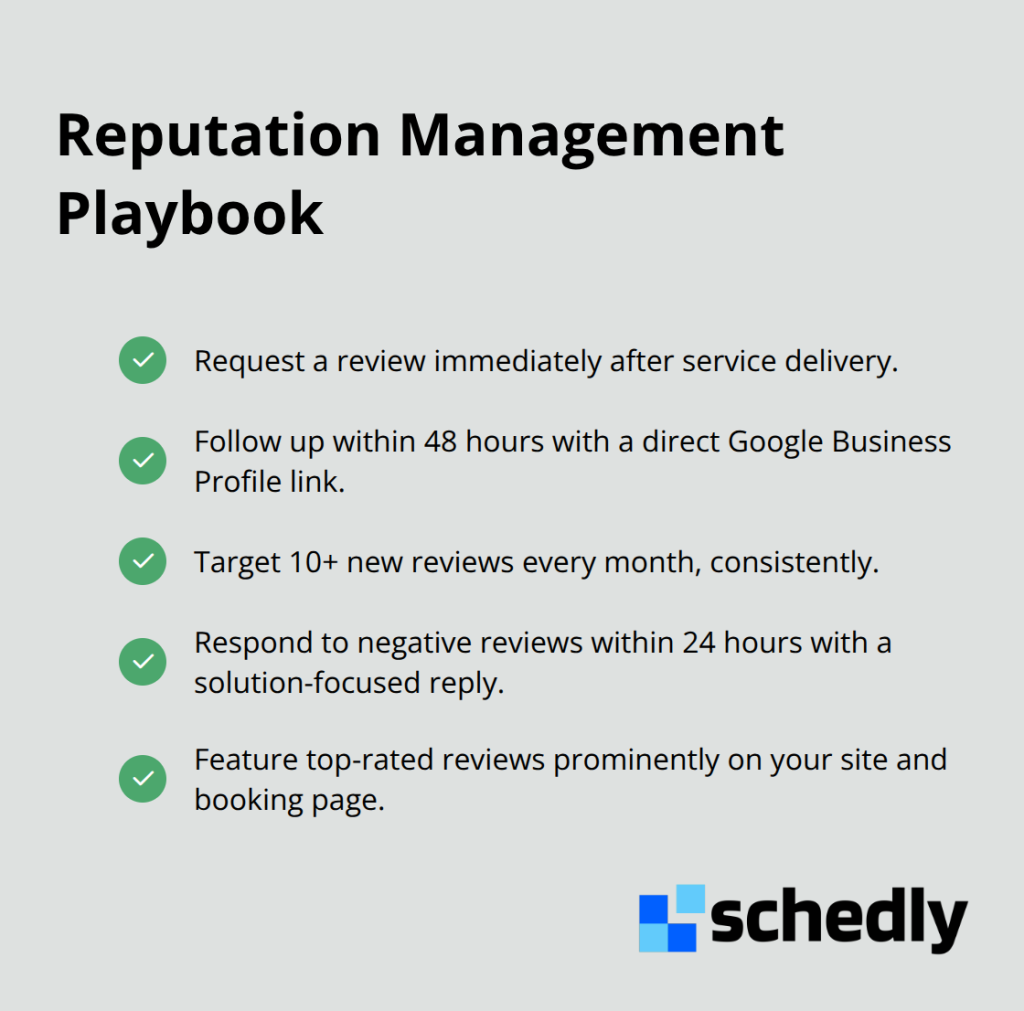
Clients who left you likely checked your online reviews and found either nothing or complaints. Respond to every negative review with a specific, solution-focused reply within 24 hours-not a defensive response, but one that addresses the concern and invites resolution offline. This demonstrates that you take feedback seriously and act on it.
Actively request reviews from satisfied clients immediately after service delivery. Follow up within 48 hours with a simple request and a direct link to your Google Business Profile. Generating 10+ reviews monthly at a consistent pace significantly outranks competitors with stagnant review counts. Display your highest-rated reviews prominently on your website and booking page.
Create a Post-Booking Communication Sequence That Signals Respect
Implement a communication sequence that makes clients feel valued and informed at every stage. Send a confirmation email immediately after booking with all appointment details, your location, parking instructions, and cancellation policy. Send a reminder 24 hours before the appointment. Follow up after service delivery with a satisfaction check and an invitation to leave a review.
This consistent communication signals respect for the client's time and commitment to their experience. Each touchpoint reinforces that you value their business and take their needs seriously. Clients who receive this level of attention are far less likely to switch to competitors, and they become advocates who refer others to you.
Final Thoughts
Clients leave for competitors because your booking experience creates friction at every turn. A confusing website, hidden pricing, poor team availability visibility, and slow responses send prospects elsewhere before they ever experience your actual service quality. These failures compound each other, transforming what should be your strongest selling point into your biggest liability.
The path forward requires addressing all three problems simultaneously. Streamline your scheduling process to under 60 seconds, display every cost upfront without exception, and respond to inquiries within 15 minutes. Build aggressive reputation management by requesting reviews consistently and responding to feedback within 24 hours. Create a post-booking communication sequence that signals respect for your clients' time at every stage.
The investment in better systems pays off immediately. Businesses that fix their booking experience see conversion rate increases of 15–25% within the first month, simply by removing unnecessary friction. Clients who book easily show up more often, cancel less frequently, and refer others to you far more readily. Schedly automates your entire booking process with 24/7 online scheduling, transparent payment processing, and workflow automation that handles follow-ups automatically, eliminating the back-and-forth emails that frustrate prospects and cost you clients.