
Schedly resources
Car Service Scheduling: How to Slash Downtime With Smart Booking

Car service scheduling directly impacts your bottom line. When vehicles sit idle between appointments, you lose revenue and frustrate customers who need their cars back fast.
At Schedly, we've seen firsthand how smart booking systems transform automotive businesses. The right scheduling software cuts downtime, fills technician calendars efficiently, and keeps customers coming back.
Why Poor Scheduling Drains Your Business
Vehicle downtime bleeds money from your shop whether you realize it or not. When a car sits waiting for an available technician or bay, you lose revenue on every hour it remains parked. Fleets using predictive maintenance tools see measurable improvements in both operational efficiency and driver satisfaction. For automotive service shops, the math works similarly: poor scheduling creates idle time that directly eats into your profit margin. Beyond the lost service hours, customers frustrated by slow turnaround abandon you for competitors who respect their time. Inefficient booking systems force your team to waste hours manually coordinating appointments, checking technician availability, and updating customers on delays. This manual work pulls your staff away from actual service work and customer relationships. The result is a shop that operates below capacity even when you're technically busy.
The Real Cost of Gaps Between Jobs
Gaps between completed jobs and the next booking represent pure waste. A technician finishes a brake job at 2 PM but the next appointment isn't until 3:30 PM-leaving 90 minutes of paid time with no revenue generated. Multiply that across your team over a week and you throw away thousands in labor costs. Real-time visibility into technician workload and bay availability eliminates these gaps entirely. When your scheduling system shows exactly which technician is free and which bay is open, you fill slots instantly instead of letting them sit empty. Fast turnaround times also become your competitive weapon. Customers choose shops that return their vehicles quickly, and shops that promise same-day or next-day service capture market share from slower competitors. Online booking available 24/7 means customers schedule appointments at midnight if they want to, not just during your business hours. This flexibility captures customers you'd otherwise lose to shops with after-hours scheduling options.
Why Manual Scheduling Kills Efficiency
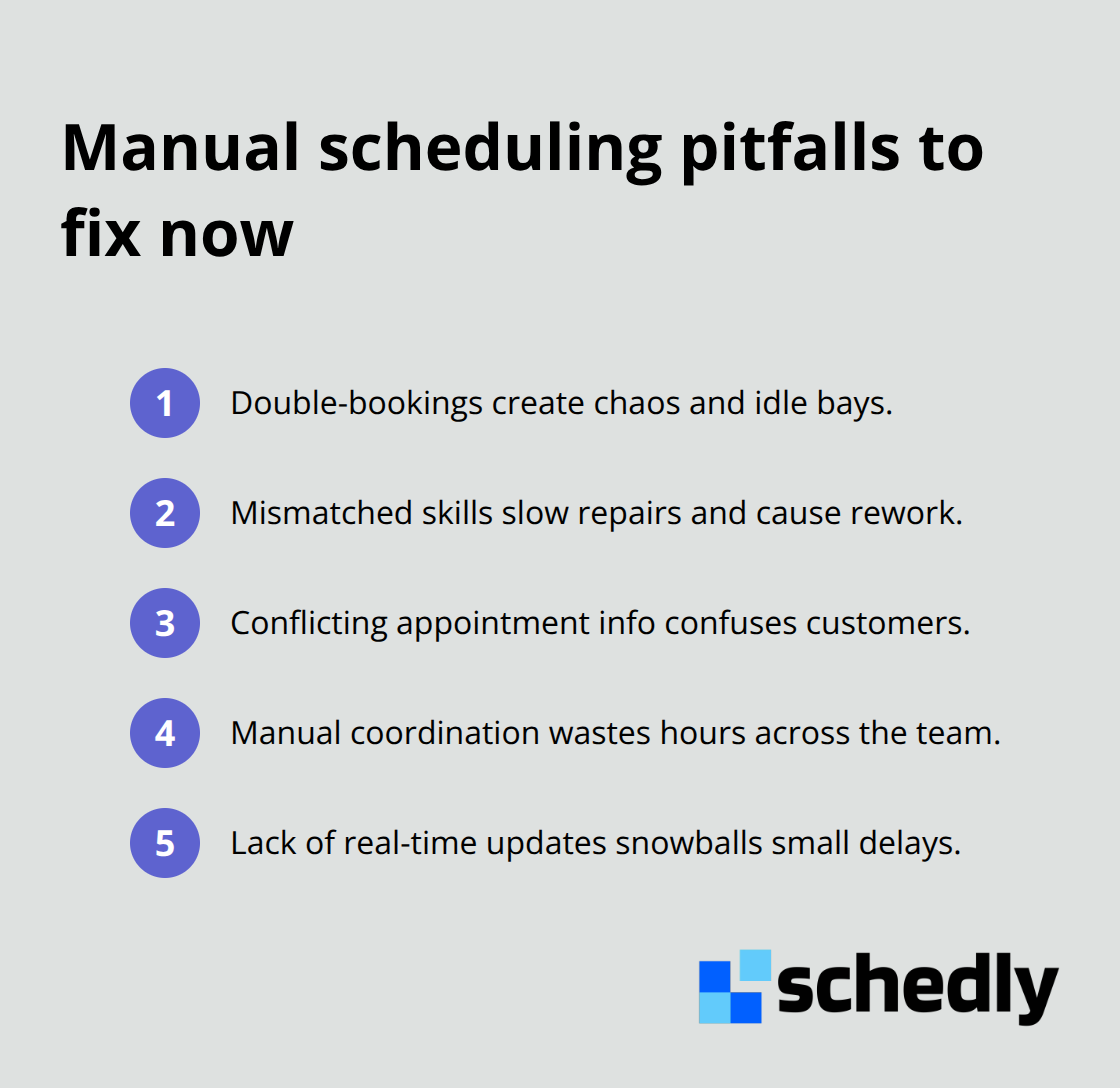
Spreadsheets and phone calls are your enemy. When your team relies on these tools, double-bookings happen, technicians get mismatched to jobs they're not qualified for, and customers receive conflicting information about appointment times. Digital scheduling software syncs across your entire operation so everyone sees the same current availability. Real-time updates prevent the cascade of problems that manual systems create.
What Smart Booking Systems Actually Do
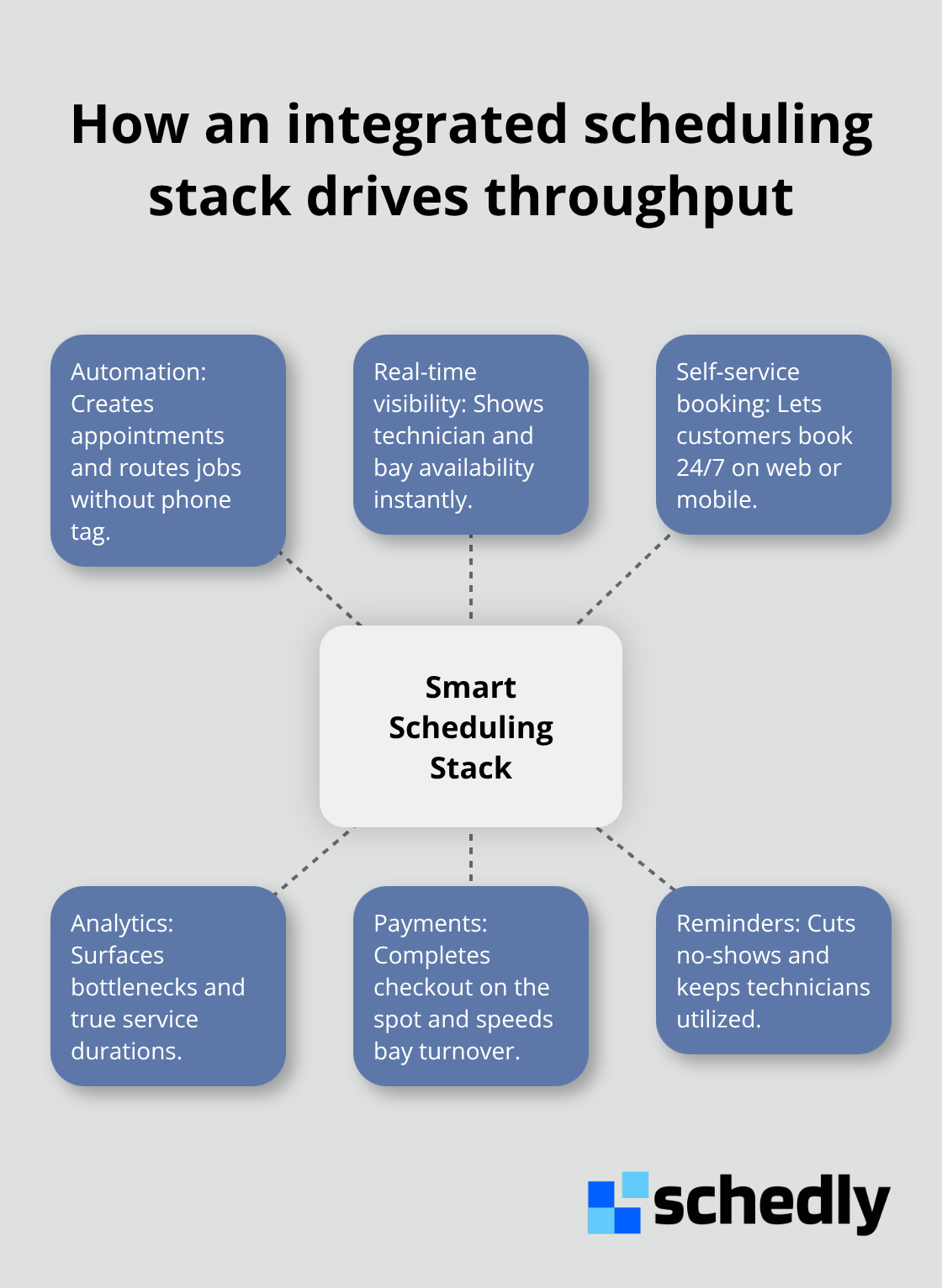
The right scheduling platform transforms how your shop operates. It automates appointment creation, eliminates manual coordination, and gives your team instant visibility into who's available and when. Your technicians work on actual repairs instead of playing phone tag with customers. Customers book their own appointments without calling you, which reduces your administrative burden significantly. Real-time data shows you exactly where bottlenecks occur-whether a particular service takes longer than expected or a specific technician consistently runs behind. This insight lets you adjust timelines, reassign work, or add capacity where it matters most. Payment processing integrates directly into your booking system, so transactions complete immediately after service rather than creating another administrative task. The combination of these features (automation, visibility, and integration) transforms your shop from reactive to proactive, filling your schedule efficiently and keeping vehicles moving through your bays faster than ever before.
How Smart Booking Fills Your Schedule Faster
Automation stops the bleeding immediately. When you move from phone calls and spreadsheets to a real-time scheduling system, your team stops wasting hours coordinating appointments and focuses entirely on service work. The moment a technician completes a job, your system flags available bays and technician capacity, letting the next customer slot in without delay. Customers book directly into open slots 24/7, your team sees updates instantly, and no appointment falls through the cracks from miscommunication.
A technician sitting idle between jobs costs you money every single minute. If your team handles five vehicles daily and gaps between jobs average just 30 minutes per vehicle, you lose roughly 2.5 hours of billable time daily. Across a four-person shop, that amounts to 10 hours per week of wasted labor-potentially $800 to $1,200 in lost revenue depending on your service rates. Real-time visibility into who's available and what they're qualified for eliminates these gaps entirely. When your scheduling software shows exactly which technician finished their last job and which bay is now empty, you fill that slot instantly instead of letting it sit unused. Technicians stop context-switching between waiting for the next appointment and busywork, which actually improves their focus and speed on repairs.
Matching Work to the Right Person at the Right Time
Most shops assign jobs wrong. A technician qualified for transmission work receives a tire rotation because they're next on the rotation list, wasting their expertise. Smart scheduling systems let you assign jobs based on actual skill, not just availability. You create rules that route transmission work to your transmission specialist and tire work to whoever's free, ensuring faster completion and fewer rework issues from mismatched assignments.
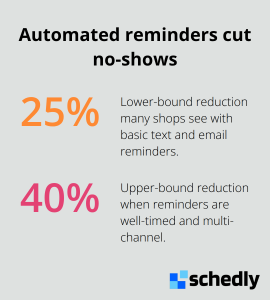
Payment integration matters more than shops realize. When transactions complete immediately after service instead of requiring a separate admin step, you reduce the time customers spend waiting around for invoicing. Faster checkout means your bay opens up sooner for the next vehicle. Digital reminders via text and email also cut your no-show rate dramatically. Automated reminders reduce no-shows by 25% to 40%, which means appointments you've already booked actually happen instead of leaving your technicians idle. You also capture appointments that would have been forgotten entirely-customers see a reminder and realize they need that service, so they confirm instead of canceling.
Seeing Exactly Where Your Bottlenecks Live
Data transforms guesswork into strategy. Your scheduling system should show you service duration trends-which services consistently run long, which technicians finish faster, and which bays experience the most traffic. If brake inspections always take 45 minutes but you've scheduled 30, you'll see this immediately in your analytics dashboard. Adjust your timeline estimates and suddenly you stop double-booking. If one technician consistently finishes jobs 20% faster than others, you know where to focus training and why their approach works. This insight lets you optimize staffing, adjust pricing to reflect true service time, and promise customers realistic turnaround times you can actually meet.
From Data to Competitive Advantage
Most shops operate on gut feel. Shops with data-driven scheduling operate with precision. Your next step involves connecting this visibility to your payment systems and customer communication channels-the final pieces that transform scheduling efficiency into actual revenue growth.
Setting Up Your Scheduling System the Right Way
Online booking available around the clock is non-negotiable anymore. Customers expect to book appointments at 11 PM on a Sunday without calling your shop. When you force them to wait until Monday morning to schedule, they book elsewhere. Your scheduling software must display real-time availability on your website and sync instantly with your technician calendars so customers never book a slot that's actually full.
Capture Search Traffic With Always-On Booking
Integration with Google Business Profile matters because customers searching for automotive service shops on Google see your availability directly in search results. They click Book Online, select their preferred time, and confirm without ever calling you. This captures search traffic that would otherwise go to competitors. Your customers fill out appointment forms with vehicle details, preferred service types, and contact information before arrival, which means your team spends less time gathering basic information and more time diagnosing and repairing.
Mobile-friendly booking is essential because roughly 60% of appointment searches now happen on phones. If your booking page doesn't work smoothly on mobile, customers abandon it mid-way and call a competitor instead. Test your booking flow on actual phones before launch, not just desktop computers.
Track Service Times With Real Data
Analytics dashboards transform scheduling from guesswork into precision management. Your software should track how long each service type actually takes, not how long you think it takes. If you've scheduled oil changes for 30 minutes but your data shows they average 38 minutes, you're consistently double-booking and creating technician chaos. Adjust your timeline estimates to match reality and suddenly your schedule stops collapsing under its own weight.
Track which technicians finish jobs fastest and whether they maintain quality through customer feedback scores. Some technicians speed through work carelessly while others take longer but generate fewer comebacks. Your analytics should reveal this difference so you can adjust assignments and training accordingly. Regularly analyzing your scheduling data ensures you catch inefficiencies before they compound into bigger problems.
Speed Up Checkout With Integrated Payments
Payment processing integration is where most shops fail badly. When customers finish service and must wait for invoicing while their paperwork gets processed manually, they get frustrated and leave negative reviews. Direct integration between your scheduling software and payment gateways like Stripe or PayPal means transactions complete the moment service ends. Customers scan a QR code, pay on a tablet, and drive away while you immediately see the completed payment and updated cash flow.
This integration also captures payment data that feeds back into your scheduling system, so you understand which services drive the highest revenue and which ones consume disproportionate technician time without paying accordingly. Configure service types with accurate durations based on your historical data and test the entire flow with a dummy booking.
Final Thoughts
Smart car service scheduling eliminates the operational chaos that drains your revenue and frustrates customers. Shops winning market share right now respect customer time and operate with precision scheduling instead of relying on manual coordination and spreadsheets. When you move to automated booking, your team stops wasting hours on administrative work and focuses entirely on repairs while your technicians work continuously instead of sitting idle between appointments.
Data transforms your competitive position entirely. When you track service times, identify bottlenecks, and assign work based on actual technician skills, you operate at capacity instead of below it (your analytics dashboard shows exactly where inefficiencies hide so you can fix them before they compound). Automated reminders cut no-shows by 25 to 40 percent, which means appointments you've already booked actually happen, and integration with your payment systems eliminates the friction that slows checkout and frustrates customers.
We at Schedly built our platform specifically for automotive businesses that want to eliminate scheduling friction and operate with precision. Schedly automates your booking process, provides 24/7 online scheduling, integrates secure payment processing, and gives you an analytics dashboard to track performance metrics that matter. Start today and watch your schedule fill faster than ever before.