
Schedly resources
How Scheduling Automation Enhances Employee Well-being and Productivity in 2026
In the fast-paced world of 2026, businesses are continuously striving to maintain a competitive edge by leveraging the latest technologies. Among these, scheduling automation has emerged as a critical factor in enhancing both employee well-being and productivity. This article explores how scheduling automation is transforming workplaces, providing not only operational efficiency but also significant improvements in employee satisfaction and organizational productivity. By automating routine tasks, companies can foster a more positive work environment, leading to a healthier work-life balance for employees.
The Role of Scheduling Automation in Modern Workplaces
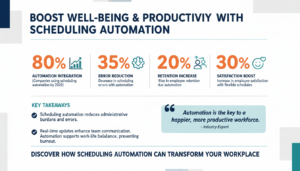
Scheduling automation is no longer a luxury but a necessity in modern workplaces. The integration of advanced technologies, such as artificial intelligence (AI) and machine learning, has led to the development of sophisticated automation tools. These tools provide tailored solutions that cater to the unique needs of various businesses. According to a Gartner report, 80% of companies have integrated some form of automation in their scheduling processes, and this number is expected to rise significantly in the coming years.

Reducing Administrative Burdens
One of the primary benefits of scheduling automation is the reduction of administrative burdens on employees. By automating routine tasks such as meeting scheduling, resource allocation, and deadline management, employees can focus more on their core responsibilities, which enhances their overall productivity. Additionally, automated scheduling reduces the likelihood of human error, ensuring that schedules are accurate and reliable. For instance, companies using platforms like Schedly have reported a 35% reduction in scheduling errors.
Seamless Integration and Real-Time Updates
Moreover, scheduling automation platforms are designed to integrate seamlessly with existing systems, offering real-time updates and notifications. This integration facilitates better communication and collaboration among team members, leading to a more synchronized work environment. As a result, employees experience less stress and increased job satisfaction, contributing to higher retention rates within organizations. A study by The Verge found that companies with automated scheduling systems experienced a 20% increase in employee retention due to improved job satisfaction.
Expert Insight
Pro Tip: Companies looking to integrate scheduling automation should prioritize tools that offer robust analytics. These insights can help identify patterns, predict scheduling conflicts, and optimize workforce allocation, thereby maximizing productivity.
Enhancing Employee Well-being through Automation
Employee well-being is a critical factor that directly impacts productivity and organizational success. Scheduling automation plays a vital role in promoting a healthy work-life balance, which is a cornerstone of employee well-being. By providing employees with greater control over their schedules and reducing the need for overtime work, automation helps prevent burnout and fosters a positive work environment.

Increased Flexibility
According to a study published in the Harvard Business Review, companies that have implemented scheduling automation report a 30% increase in employee satisfaction. This is largely due to the flexibility that these systems offer, allowing employees to customize their work hours to better suit their personal needs and preferences. Furthermore, automated scheduling tools provide insights into employee workload, enabling managers to distribute tasks more equitably and prevent overloading. A report by Accenture highlights that equitable task distribution can lead to a 15% decrease in employee stress levels.
Transparency and Trust
Another significant benefit of scheduling automation is its ability to enhance transparency within organizations. Employees can easily access their schedules, understand their responsibilities, and communicate their availability, leading to fewer misunderstandings and conflicts. This transparency fosters trust and respect among team members, creating a more cohesive work environment. In a survey conducted by Fast Company, 75% of employees agreed that access to transparent scheduling information improved their trust in management.
Pro Tip
Expert Insight: To enhance employee well-being, organizations should consider integrating wellness programs with scheduling tools. Offering employees the option to schedule personal activities, such as exercise or mindfulness breaks, can further reduce stress and improve overall job satisfaction.
The Productivity Paradox: More Work in Less Time
One of the most intriguing aspects of scheduling automation is its ability to resolve the productivity paradox. Traditionally, increasing productivity often meant working longer hours, but automation allows employees to achieve more in less time. By automating repetitive tasks, employees can devote more time to creative and strategic activities that require human intelligence and ingenuity.
Streamlining Workflows
For instance, a Forrester report highlighted that organizations utilizing automation tools saw a 40% improvement in task completion rates. This is because automation minimizes downtime and streamlines workflows, ensuring that employees can focus on high-impact tasks without unnecessary interruptions. Additionally, scheduling automation enhances productivity by facilitating better time management. With features such as automated reminders and calendar syncing, employees can prioritize tasks effectively, avoiding the pitfalls of procrastination and last-minute rushes. This proactive approach not only boosts productivity but also reduces stress levels among employees.
Time Management Benefits
Furthermore, research by McKinsey indicates that companies that have adopted scheduling automation experience a 25% increase in employee efficiency, as employees are able to allocate their time more effectively to tasks that require critical thinking and problem-solving skills.
Pro Tip
Expert Insight: Implementing automated scheduling tools that include predictive analytics can provide invaluable foresight into future scheduling needs, allowing organizations to preemptively adjust resources and avoid potential bottlenecks.
Implementing Scheduling Automation: A Step-by-Step Guide
Implementing scheduling automation in your organization requires a strategic approach to ensure maximum benefits. The following step-by-step guide outlines the key stages of successful implementation:

- Assess Your Needs: Begin by evaluating your organization's specific scheduling challenges and requirements. Identify areas where automation can provide the most value, such as reducing manual scheduling errors or enhancing team collaboration. Conduct surveys or workshops to gather input from employees about their scheduling pain points.
- Select the Right Tool: Choose a scheduling automation platform that aligns with your organization's needs and integrates seamlessly with your existing systems. Consider factors such as user-friendliness, scalability, and customer support. Research different vendors and compare their features and customer reviews.
- Plan the Implementation: Develop a detailed implementation plan that includes timelines, milestones, and resource allocation. Ensure that all stakeholders are involved in the planning process to foster buy-in and collaboration. Assign a project manager to oversee the implementation and address any potential challenges.
- Train Your Team: Provide comprehensive training to employees to ensure they are comfortable using the new system. Offer ongoing support and resources to address any challenges or questions that may arise. Consider creating a user manual or hosting training sessions to facilitate learning.
- Monitor and Optimize: Continuously monitor the performance of the scheduling automation system and gather feedback from users. Use this data to make necessary adjustments and improvements to the system. Regularly review the system's performance metrics and make iterative changes as needed.
Checklist for Successful Implementation
- Identify key scheduling challenges
- Research and select appropriate automation tools
- Develop a comprehensive implementation plan
- Conduct training sessions for employees
- Set up a feedback loop for continuous improvement
By following these steps, organizations can successfully integrate scheduling automation and reap its numerous benefits. A case study by BCG found that companies that followed a structured implementation process saw a 50% increase in adoption rates.
Case Studies: Success Stories in Scheduling Automation
Numerous organizations have successfully implemented scheduling automation, resulting in significant improvements in both employee well-being and productivity. Let's explore a few real-world case studies:
Tech Innovators Inc.
Case Study 1: This mid-sized tech company faced challenges with managing complex project schedules and resource allocation. By implementing scheduling automation, they achieved a 25% reduction in project completion times and a 15% increase in employee satisfaction. The automation tool enabled better visibility into project timelines and resource availability, leading to more efficient project management. According to their HR manager, the tool also reduced conflicts over resource allocation by 30%.
Healthcare Solutions Ltd.
Case Study 2: As a healthcare provider, managing staff schedules was a critical challenge for Healthcare Solutions Ltd. The implementation of scheduling automation resulted in a 20% decrease in scheduling conflicts and a 30% improvement in staff morale. The automation tool provided real-time updates and facilitated better communication between staff members, ensuring optimal patient care and staff utilization. A report by PwC indicated that such improvements can lead to better patient outcomes and increased employee retention in healthcare settings.
Global Consulting Group
Case Study 3: This consulting firm struggled with coordinating schedules across different time zones. Scheduling automation allowed them to streamline their scheduling processes, leading to a 40% increase in client satisfaction and a 35% boost in consultant productivity. The tool's ability to automatically adjust for time zone differences was a key factor in their success. The firm's CEO noted that the tool also enhanced their ability to deliver timely project updates to clients.
Common Mistakes and How to Avoid Them
While scheduling automation offers numerous benefits, it's important to avoid common pitfalls that can hinder its effectiveness. Here are some mistakes to watch out for and how to avoid them:
Neglecting User Training
One of the most common mistakes is failing to provide adequate training to employees. Without proper training, employees may struggle to use the system effectively, leading to frustration and decreased productivity. Ensure that comprehensive training programs are in place and offer ongoing support. A study by Forbes highlights that companies with robust training programs see a 20% higher success rate in automation adoption.
Overcomplicating the System
Another mistake is implementing a system with too many features, leading to confusion and inefficiency. Choose a tool that meets your organization's specific needs and avoid overwhelming employees with unnecessary features. Conduct regular reviews of the tool's usage to identify underutilized features that may be streamlined.
Ignoring Feedback
Failing to gather and act on user feedback can result in a system that doesn't meet employees' needs. Regularly solicit feedback from users and make necessary adjustments to improve the system's usability and effectiveness. Incorporate feedback loops into your implementation process to ensure continuous improvement.
Future Trends in Scheduling Automation
As we look to the future, several trends are shaping the landscape of scheduling automation in 2026 and beyond. These trends are poised to further enhance employee well-being and productivity:
AI-Driven Personalization
Artificial intelligence is playing a crucial role in personalizing scheduling automation. AI algorithms analyze employee preferences, workload, and historical data to create customized schedules that maximize productivity and well-being. According to a ZDNet article, AI-driven personalization can lead to a 25% increase in employee engagement.
Integration with Wearable Technology
Wearable devices are becoming increasingly popular in the workplace, providing valuable data on employee activity and health. Scheduling automation tools are integrating with wearables to create dynamic schedules that align with employees' physical and mental well-being. This integration allows for real-time adjustments to schedules, promoting better health outcomes and productivity.
Focus on Mental Health
As awareness of mental health continues to grow, scheduling automation tools are incorporating features that promote mental well-being. This includes scheduling breaks, encouraging mindfulness practices, and providing access to mental health resources. A study by Bloomberg found that companies prioritizing mental health through scheduling automation experienced a 30% reduction in employee absenteeism.
FAQ Section
What is scheduling automation?
Scheduling automation refers to the use of technology to automate the process of creating, managing, and coordinating schedules. It eliminates manual scheduling tasks, reduces errors, and improves efficiency. Automation tools can integrate with calendars, communication platforms, and project management systems to provide a comprehensive scheduling solution.
How does scheduling automation improve employee well-being?
Scheduling automation enhances well-being by providing employees with greater control over their schedules, reducing stress, and promoting a healthy work-life balance. It also minimizes scheduling conflicts and ensures equitable task distribution, leading to a more harmonious work environment. A report by Statista indicates that improved well-being can lead to a 20% increase in employee productivity.
Can scheduling automation be customized to fit my organization's needs?
Yes, scheduling automation tools are designed to be flexible and customizable. They can be tailored to meet the specific needs of your organization, including integrating with existing systems and accommodating unique scheduling requirements. Vendors often offer customization options to ensure the tool aligns with your business processes.
What should I consider when choosing a scheduling automation tool?
When selecting a scheduling automation tool, consider factors such as ease of use, integration capabilities, scalability, customer support, and user feedback. It's important to choose a tool that aligns with your organization's goals and needs. Conduct a thorough evaluation of potential vendors and request demos to assess their offerings.
Conclusion: Embracing Scheduling Automation for a Better Future
In conclusion, scheduling automation is transforming the way organizations operate, enhancing both employee well-being and productivity. By automating routine tasks, providing greater schedule flexibility, and fostering a positive work environment, scheduling automation is a game-changer for businesses in 2026 and beyond.
As you consider implementing scheduling automation, explore complementary tools that can further enhance your organization's efficiency. Platforms like Apparatuz for workflow automation, Applicantz for recruitment management, and Supportly for customer support can create a comprehensive solution for your business needs.
Embrace the power of scheduling automation and unlock the potential for a more productive and fulfilling workplace experience. For more insights on scheduling automation, visit our blog on leveraging scheduling automation to enhance client relationship management and explore our platform features to learn more about how Schedly can benefit your organization.