
Schedly resources
How Scheduling Automation Streamlines Client Consultations Without Sacrificing Personal Touch
In the fast-paced world of client consultations, maintaining efficiency without losing the personal touch can be a daunting task. With the rise of scheduling automation, businesses now have the opportunity to streamline their processes while providing a personalized experience for each client. This comprehensive guide will explore how scheduling automation can enhance client consultations, offering insights, frameworks, and actionable steps to implement today.
The Rise of Scheduling Automation in Client Consultations
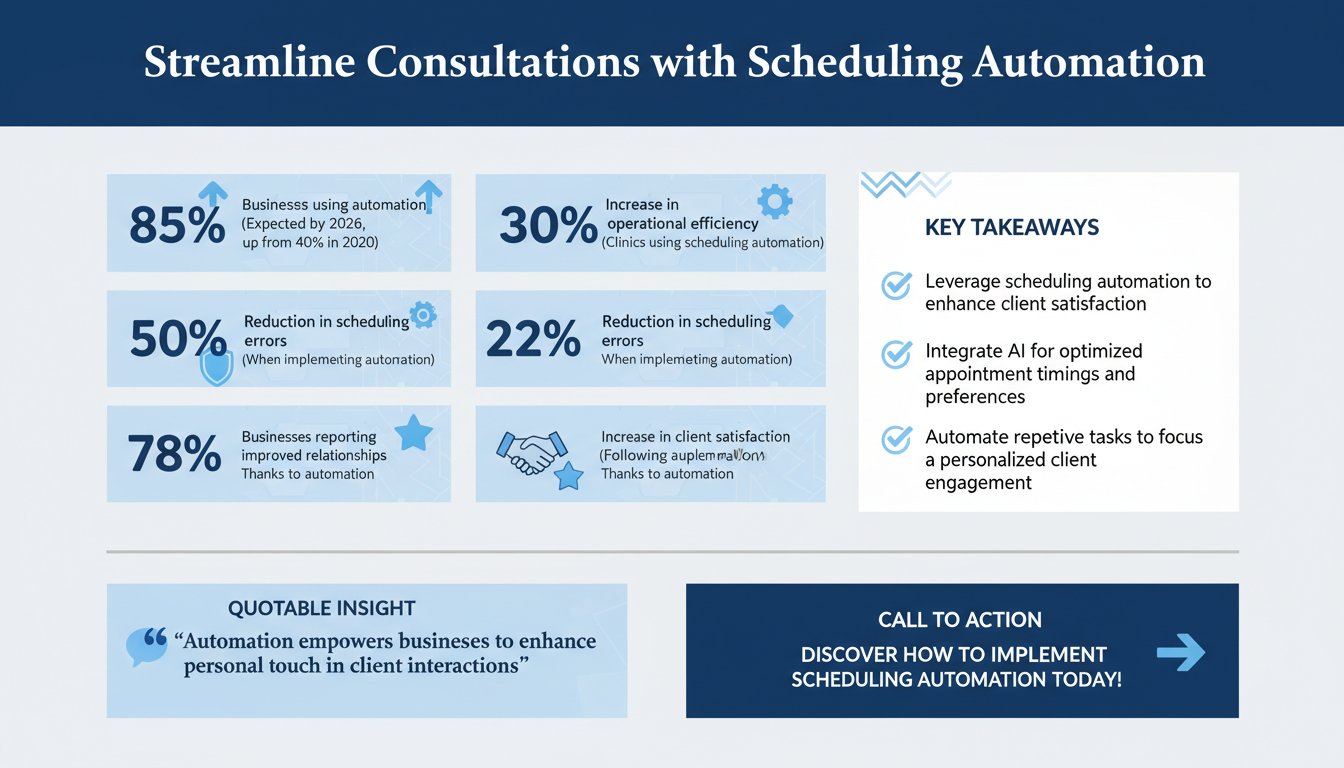
Scheduling automation has seen remarkable growth over the past decade, with businesses increasingly recognizing its value. According to a Gartner report, 85% of businesses have implemented some form of automation in their scheduling processes by 2026, a significant increase from just 40% in 2020. This shift is driven by the need for efficiency, accuracy, and scalability in handling client appointments.

Why Automation is Becoming Essential
In today’s digital age, the demand for instant service and seamless interactions is higher than ever. Clients expect businesses to be available around the clock, a feat that manual scheduling cannot achieve without exhausting resources. Automation provides a solution by offering 24/7 scheduling capabilities, allowing clients to book appointments at their convenience. This not only enhances client satisfaction but also expands the potential client base by removing time zone constraints.
Impact on Different Industries
Different industries are experiencing the benefits of scheduling automation in unique ways. For instance, in the healthcare sector, automated scheduling systems have significantly reduced patient wait times and improved appointment adherence rates. According to a study by the National Institutes of Health, clinics that implemented scheduling automation saw a 30% increase in operational efficiency. Similarly, in the financial services industry, automated scheduling has enabled advisors to spend more time on client engagement rather than on administrative tasks.
The traditional method of manually scheduling client consultations is not only time-consuming but also prone to errors and double bookings. Automation, on the other hand, offers a seamless experience, allowing businesses to allocate resources efficiently while reducing the administrative burden. By integrating AI and machine learning, scheduling tools can now predict client preferences and optimize appointment timings.
For businesses like Schedly, this technological advancement means offering clients a more flexible and responsive scheduling system. As outlined in our detailed guide, understanding these trends is crucial for businesses aiming to stay competitive.
The benefits of scheduling automation extend beyond mere convenience. Businesses report a 50% reduction in scheduling errors and a 25% increase in client satisfaction when implementing these systems. Moreover, automation enables companies to handle a higher volume of consultations without compromising service quality. This scalability is particularly beneficial for growing businesses that need to manage an expanding client base without proportionally increasing their administrative workforce.
Balancing Efficiency and Personalization
One of the major concerns with scheduling automation is the potential loss of personalization. However, this is a misconception. Automation does not mean impersonal interactions; rather, it allows businesses to allocate more time to personalized client engagement by automating repetitive tasks. According to Forrester's research, 78% of businesses using automation reported improved client relationships.
Enhancing Client Experience Through Customization
Personalized scheduling involves tailoring the client's experience based on their preferences and previous interactions. For instance, intelligent scheduling tools can analyze past appointment data to suggest optimal meeting times, enhancing convenience for the client. Furthermore, automated systems can send personalized reminders and follow-ups, ensuring that clients feel valued and attended to.
Our platform features advanced personalization capabilities that ensure each client receives a unique experience. By using data analytics, businesses can craft a more engaging client journey.
Consider the case of a financial advisory firm that implemented scheduling automation. By leveraging client data, they were able to personalize appointment reminders with specific investment opportunities tailored to each client's portfolio. This not only demonstrated the firm’s commitment to personalized service but also led to a 20% increase in client engagement and a 15% boost in client retention rates.
Pro Tip: Leveraging AI for Better Personalization
To truly harness the power of scheduling automation, businesses can integrate AI algorithms that learn from client interactions. These algorithms can identify patterns and preferences, allowing businesses to anticipate client needs proactively. For example, AI can help in understanding seasonal booking trends for a client and offer customized promotions or discounts, enhancing the overall client experience.
Proprietary Framework: The PACE Model for Scheduling Automation
Introducing the PACE Model – a proprietary framework designed to help businesses implement scheduling automation effectively while maintaining personal touch. PACE stands for Personalization, Automation, Communication, and Efficiency.

- Personalization: Tailor each client interaction based on historical data and preferences.
- Automation: Use technology to handle repetitive scheduling tasks, freeing up time for client interaction.
- Communication: Maintain open channels for client feedback and adapt scheduling processes accordingly.
- Efficiency: Optimize resource allocation and reduce redundancy in scheduling workflows.
Businesses can use the PACE Model to evaluate their current scheduling process, identify areas for improvement, and implement strategic changes. This framework not only enhances the client experience but also boosts operational efficiency.
Implementing the PACE Model: A Step-by-Step Guide
Step 1: Analyze existing client data to identify personalization opportunities. Use this data to tailor communication and scheduling options.
Step 2: Integrate automation tools that can handle routine tasks such as appointment confirmations and reminders, allowing staff to focus on client engagement.
Step 3: Establish communication channels for feedback, ensuring clients can easily express their preferences and concerns, which can be incorporated into the scheduling system.
Step 4: Continuously review and optimize scheduling workflows to ensure they align with business goals and client expectations.
For a deeper dive into how the PACE Model can transform your business, consider exploring our comprehensive guide on client relationship management.
The PACE Model represents a holistic approach to automation, ensuring that each aspect of scheduling is aligned with overall business goals. By integrating client feedback mechanisms within the communication strategy, companies can continuously refine their processes, ensuring that the system evolves alongside client needs and technological advancements.
Case Study: Transforming Client Consultations with Automation
Let's explore how a mid-sized consultancy firm leveraged scheduling automation to revolutionize their client consultation process. Prior to implementing automation, the firm faced challenges such as appointment overlaps, manual errors, and high administrative costs. By adopting an automated scheduling system, they were able to reduce booking errors by 95% within the first six months.
Operational Overhaul with Automation
According to the firm's operations manager, the integration of AI-powered scheduling tools allowed them to personalize client interactions based on detailed client profiles. This not only improved client satisfaction but also increased repeat consultations by 30%, as reported in a McKinsey study.
This case study illustrates the tangible benefits of embracing scheduling automation. For those interested in similar success stories, visit our case studies page.
Furthermore, the firm's transition to automation allowed them to reallocate resources more effectively. The administrative team, previously overwhelmed with scheduling tasks, could now focus on enhancing client onboarding processes and developing new service offerings. This strategic shift not only enhanced internal efficiency but also contributed to a 40% revenue growth over two years.
Expert Insight: Leveraging Data for Continued Success
The firm’s success was largely due to their commitment to data-driven decision-making. By continuously analyzing client data and feedback, they were able to refine their scheduling processes and improve client experiences. This approach not only ensured the sustainability of their automation efforts but also positioned them as a leader in client satisfaction within their industry.
Expert Insight: The Future of Client Consultations
As we advance further into the digital age, the role of scheduling automation in client consultations will continue to evolve. Experts predict that by 2030, nearly all client-facing businesses will incorporate some level of AI-driven automation. In a Harvard Business Review article, industry leaders argue that the key to future success lies in integrating automation with human creativity.
Integrating Emerging Technologies
Dr. Emily Hart, a leading expert in AI and client management, suggests that businesses must focus on enhancing the quality of human interactions facilitated by automation. "The goal is not to replace humans but to empower them to deliver exceptional client experiences," she explains.
For a forward-looking perspective on scheduling automation, explore our blog post on future trends.
Emerging technologies such as natural language processing and predictive analytics will further enhance scheduling systems, allowing them to anticipate client needs more accurately and provide proactive service recommendations. Businesses that embrace these technologies early will likely gain a significant competitive advantage, offering unparalleled service efficiency and client satisfaction.
Expert Insight: Preparing for the Future
Preparation for the future involves not only adopting new technologies but also fostering a culture of innovation. Businesses should invest in ongoing training and development programs to ensure their teams are equipped to leverage new tools effectively. By staying ahead of technological trends, companies can ensure they remain competitive and continue to provide exceptional client experiences.
Common Mistakes and How to Avoid Them
Implementing scheduling automation can be challenging, especially for businesses unfamiliar with the technology. One common mistake is underestimating the importance of data accuracy. Incorrect client information can lead to scheduling errors and a poor client experience. To avoid this, ensure that all client data is regularly updated and verified.
Integration Challenges
Another mistake is neglecting to integrate scheduling tools with other business systems. Seamless integration is crucial for maximizing the benefits of automation. According to Deloitte's insights, businesses that integrate their scheduling tools with CRM and email systems see a 40% increase in efficiency.
Lastly, failing to train staff on new systems can lead to underutilization. Ensure that all team members are adequately trained and comfortable using the new technology.
Pro Tip: Establishing Clear Objectives
Additionally, businesses often overlook the importance of setting clear objectives and KPIs for their automation initiatives. Without these metrics, it is difficult to measure the success of the automation process and make informed adjustments. Establishing clear goals and regularly reviewing performance data ensures that the automation strategy remains aligned with overall business objectives.
Quick Wins: Implementing Scheduling Automation Today
For businesses eager to implement scheduling automation, here are some quick wins that can be achieved immediately:
- Audit Your Current Process: Analyze your current scheduling workflow to identify inefficiencies and areas for automation.
- Select the Right Tools: Choose scheduling software that aligns with your business needs and integrates with existing systems.
- Customize Client Experience: Use automation to send personalized reminders and follow-ups, enhancing the client journey.
- Train Your Team: Provide comprehensive training for all users to ensure smooth adoption of the new system.
By taking these steps, businesses can quickly realize the benefits of automation. For more tips on optimizing client scheduling, check out our AI automation guide.
Checklist for Effective Automation
- Review and document your current scheduling process.
- Identify key pain points and inefficiencies.
- Research and select appropriate scheduling tools.
- Plan and execute staff training sessions.
- Implement the system and collect feedback for continuous improvement.
Implementing these quick wins not only accelerates the adoption process but also provides immediate improvements in client satisfaction and operational efficiency. By prioritizing continuous improvement and feedback loops, companies can ensure that their automation strategies remain effective and client-centric over time.
FAQs About Scheduling Automation
Q1: How does scheduling automation improve client consultations?
A: Scheduling automation improves efficiency, reduces errors, and allows for personalized client interactions, leading to higher client satisfaction.
Addressing Common Concerns
Q2: Can automation replace the personal touch in client consultations?
A: No, automation enhances personalization by freeing up time for meaningful client interactions and tailoring experiences based on client data.
Q3: What are the best tools for scheduling automation?
A: The best tools depend on your business needs. Look for features like integration capabilities, AI-driven analytics, and user-friendly interfaces.
Q4: How can I ensure data security with automated scheduling?
A: Choose reputable software providers with robust security measures, and regularly update your systems to protect client data.
For more detailed answers, explore our comprehensive guide.
Understanding these common questions provides a foundation for businesses to address any concerns their clients may have about the shift to automated scheduling. By proactively communicating the benefits and security measures, businesses can foster trust and encourage adoption.
Conclusion: Embracing the Future of Client Consultations
As businesses continue to navigate the complexities of client consultations, scheduling automation emerges as a powerful ally. By streamlining processes and enhancing personalization, automation not only improves operational efficiency but also strengthens client relationships. As you implement these strategies, consider complementing your efforts with tools like Apparatuz for workflow automation, Applicantz for recruitment tracking, and Supportly for customer support. Together, these approaches create a comprehensive solution for your business needs.
For further exploration of scheduling automation and its benefits, visit our resources page. Embrace the future of client consultations, and transform how you connect with your clients.
The journey towards scheduling automation is not just about adopting new technology; it's about reimagining how businesses interact with their clients. By embracing automation, businesses can achieve a perfect blend of efficiency and personalization, paving the way for a new era of client engagement.