Small businesses generate massive amounts of data every day, but most owners struggle to turn this information into actionable insights. Business analytics for small businesses transforms raw numbers into strategic advantages that drive growth and profitability.
At Schedly, we’ve seen how the right analytics approach helps companies make smarter decisions faster. This guide shows you exactly how to implement analytics systems that actually move the needle for your business.
What Business Analytics Actually Means for Small Companies
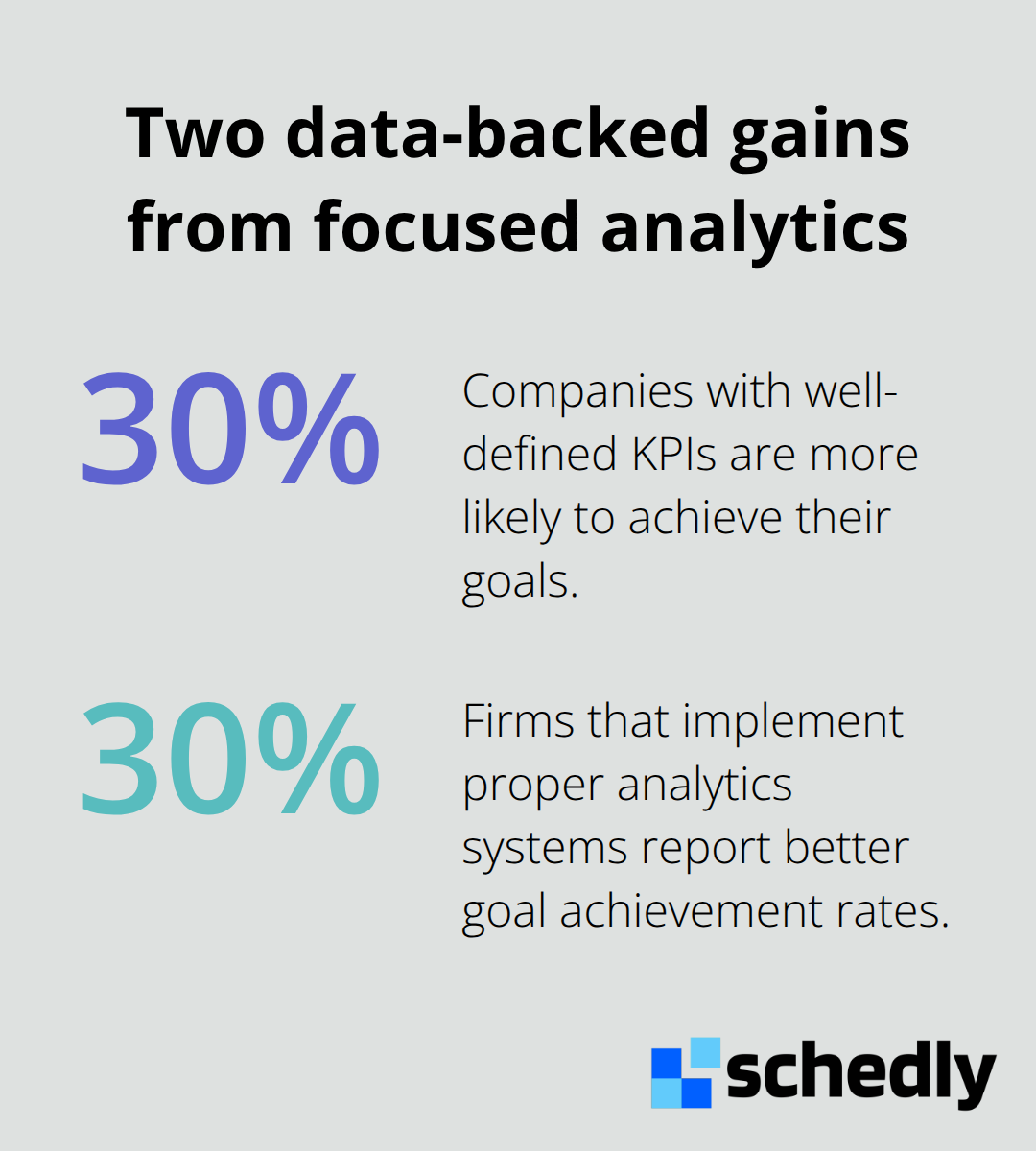
Business analytics for small companies transforms everyday operational data into profitable decisions. Small business analytics centers on immediate, actionable insights from sales patterns, customer behavior, and operational efficiency rather than complex enterprise modeling. Research from the British Business Analytics Association shows that businesses with well-defined KPIs are 30% more likely to achieve their goals.
The Numbers That Drive Real Results
Most small businesses track revenue and expenses but miss the metrics that predict future performance. Customer acquisition cost, lifetime value, and monthly recurring revenue reveal growth potential better than quarterly sales figures. TechMarket UK found that companies centralize data into a single source and reduce reporting time, which frees up resources for strategic decisions.
Track conversion rates across marketing channels, average order values, and customer retention rates monthly. Monitor operational metrics like inventory turnover, employee productivity per hour, and cost per lead. These indicators help you identify problems before they impact cash flow and spot opportunities for expansion.
Smart Data Collection Strategies
Small businesses often collect too much irrelevant data while they ignore critical performance indicators. Focus on three to five key metrics that directly impact revenue and growth. Data Analytics Europe research indicates that companies use data visualization tools and make decisions faster than those who rely on spreadsheets.
Start with your biggest revenue driver and work backward to identify the metrics that influence it most. Avoid vanity metrics like social media likes or website visits without conversion tracking. Instead, measure metrics that connect directly to business outcomes (lead-to-customer conversion rates and average deal size).
Tools That Actually Work for Small Teams
The right analytics platform makes data accessible without technical expertise. Modern scheduling software like Schedly provides business performance insights through advanced analytics dashboards that help track key metrics and support data-driven decisions. Cloud-based solutions offer flexibility without heavy upfront investments.
Choose tools that integrate with your existing systems and provide real-time updates. The next step involves selecting specific analytics solutions that fit your budget and technical capabilities.
Which Analytics Tools Actually Deliver Results
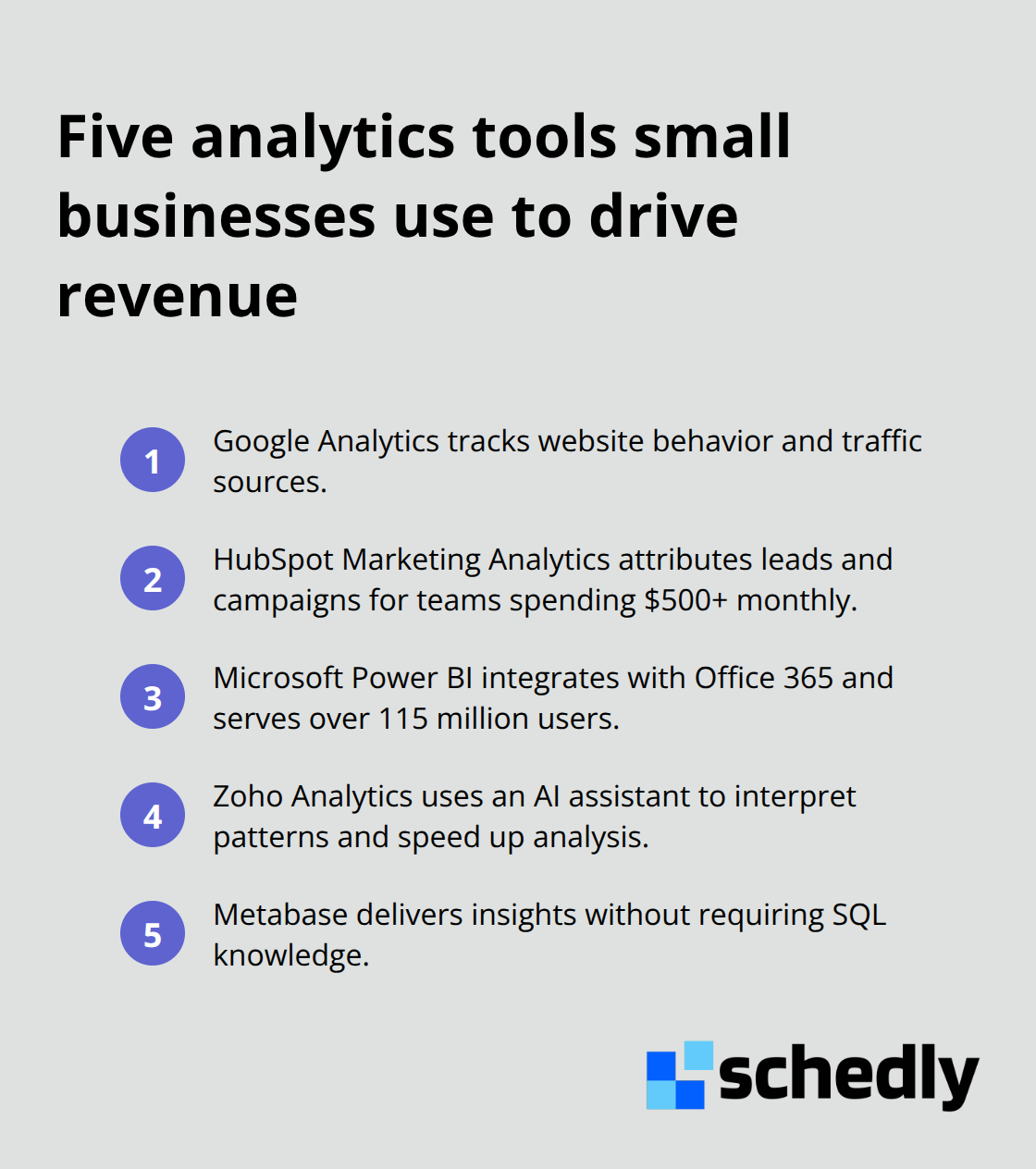
Google Analytics remains the gold standard for website tracking, but small businesses need specialized tools that connect directly to revenue generation. HubSpot Marketing Analytics provides comprehensive campaign tracking and lead attribution for companies that spend more than $500 monthly on marketing. Microsoft Power BI serves over 115 million users and integrates seamlessly with Office 365, which makes data sharing effortless for teams that already use Microsoft products. Zoho Analytics offers an AI assistant that interprets data patterns automatically and reduces analysis time by hours each week. Metabase requires zero SQL knowledge and provides immediate insights for businesses that just start their analytics journey.
CRM Analytics That Drive Sales Growth
Modern CRM systems track far more than contact information and deal stages. Salesforce Analytics helps marketers assess the value of channels that connect them to potential customers. Pipedrive’s reports show exactly where deals stall in your pipeline and which sales activities produce the best conversion rates. HubSpot’s free CRM tracks email open rates, website behavior, and deal progression automatically, which gives small teams enterprise-level insights without the complexity. These platforms transform customer data into actionable sales strategies that boost conversion rates.
Social Media Analytics That Matter
Instagram Business accounts provide demographic breakdowns and engagement timing that directly impact content strategy effectiveness. LinkedIn Analytics helps measure ROI of social media for B2B marketing efforts. Facebook Insights shows cost per lead across different audience segments and helps optimize ad spend allocation. YouTube Analytics tracks watch time and subscriber conversion rates and identifies content that builds audience relationships. Focus on platforms where your customers actually spend time rather than try to maintain presence everywhere.
Financial Analytics for Better Decisions
QuickBooks Analytics provides AI-powered accounting and bookkeeping software for real-time financial insights. Xero’s dashboard highlights profit margins by product line and identifies which services generate the highest returns. FreshBooks tracks project profitability and shows which clients consume the most resources relative to revenue generated. These tools help small businesses optimize pricing strategies and resource allocation based on actual financial performance rather than estimates.
The right analytics tools provide the foundation, but successful implementation requires proper data collection systems that feed these platforms with accurate information.
How to Implement Analytics Systems That Work
Data collection systems must connect every customer touchpoint to generate meaningful business insights. Start with your payment processor, customer communication channels, and appointment systems because these capture the most valuable behavioral data. Connect your email marketing platform, social media accounts, and website analytics to create a unified data stream that shows the complete customer journey from first contact to final purchase.
Set Up Automated Data Collection
Modern scheduling platforms automatically track appointment patterns, customer preferences, and revenue metrics from initial booking to payment completion. Configure your systems to capture customer demographics, service preferences, and communication history without manual data entry. Link your point-of-sale system with inventory management software to track product performance and identify bestsellers. This automation eliminates human error and provides consistent data quality across all business functions.
Build Reports That Drive Action
Effective dashboards focus on three metrics maximum per screen and update automatically every 24 hours. Research shows that companies use data visualization tools effectively, though many struggle with advanced analytics capabilities. Create separate dashboards for daily operations, weekly performance reviews, and monthly strategic sessions.

Daily dashboards should highlight appointment bookings, cancellations, and revenue compared to the same day last week. Weekly reports track customer acquisition costs, average deal size, and conversion rates across marketing channels. Monthly analytics focus on customer lifetime value trends, seasonal patterns, and growth opportunities (particularly for service-based businesses).
Train Teams to Interpret Analytics
Designate one team member as your analytics champion who understands every metric and can explain what each number means for business decisions. Schedule 15-minute weekly analytics reviews where this person highlights the most important changes and recommends specific actions. Focus training on trend interpretation rather than technical platform features because business context matters more than software skills.
Teach staff to ask why metrics change before they react to numbers. Establish clear protocols for when specific thresholds trigger immediate responses like adjusting marketing spend or scheduling additional staff. Research indicates that automation of routine data tasks helps businesses compete and scale more effectively, which means your team spends more time acting on insights rather than gathering information.
Final Thoughts
Business analytics for small businesses delivers measurable growth through improved decision-making, cost reduction, and customer insights. Companies that implement proper analytics systems see 30% better goal achievement rates and significantly faster response times to market changes. Start your analytics journey with three key metrics that directly impact revenue and choose tools that integrate with your existing systems.
Analytics eliminates guesswork from pricing decisions, marketing spend allocation, and resource planning. You’ll identify profitable customer segments, optimize service delivery, and predict seasonal trends before they affect cash flow. The transformation happens when you commit to data-driven decisions rather than rely on intuition alone (which most small businesses still do).
Modern scheduling platforms like Schedly provide business performance insights through advanced analytics dashboards that help track key metrics and support data-driven decisions. These integrated solutions eliminate the complexity of managing multiple analytics tools while delivering actionable insights. Your investment in analytics systems pays dividends through improved operational efficiency and strategic growth opportunities.


