Payment security isn’t optional anymore. Customers expect their data to be protected, and regulators demand it through PCI compliance standards.
At Schedly, we’ve seen firsthand how PCI compliant payments build genuine trust with customers while protecting your business from fraud and penalties. This guide walks you through what compliance means, how it shields your customers, and why it matters for your bottom line.
What PCI Compliance Actually Requires
The 12 Requirements That Protect Cardholder Data
PCI DSS is a set of 12 security requirements administered by the PCI Security Standards Council, a consortium of Visa, Mastercard, American Express, Discover, and JCB. These requirements cover network security, data protection, access control, monitoring, testing, and governance. If your business accepts card payments, these requirements apply to you-no exceptions based on size or industry. The PCI Security Standards Council has maintained these standards since 2006, and they’ve become the baseline for payment security worldwide.
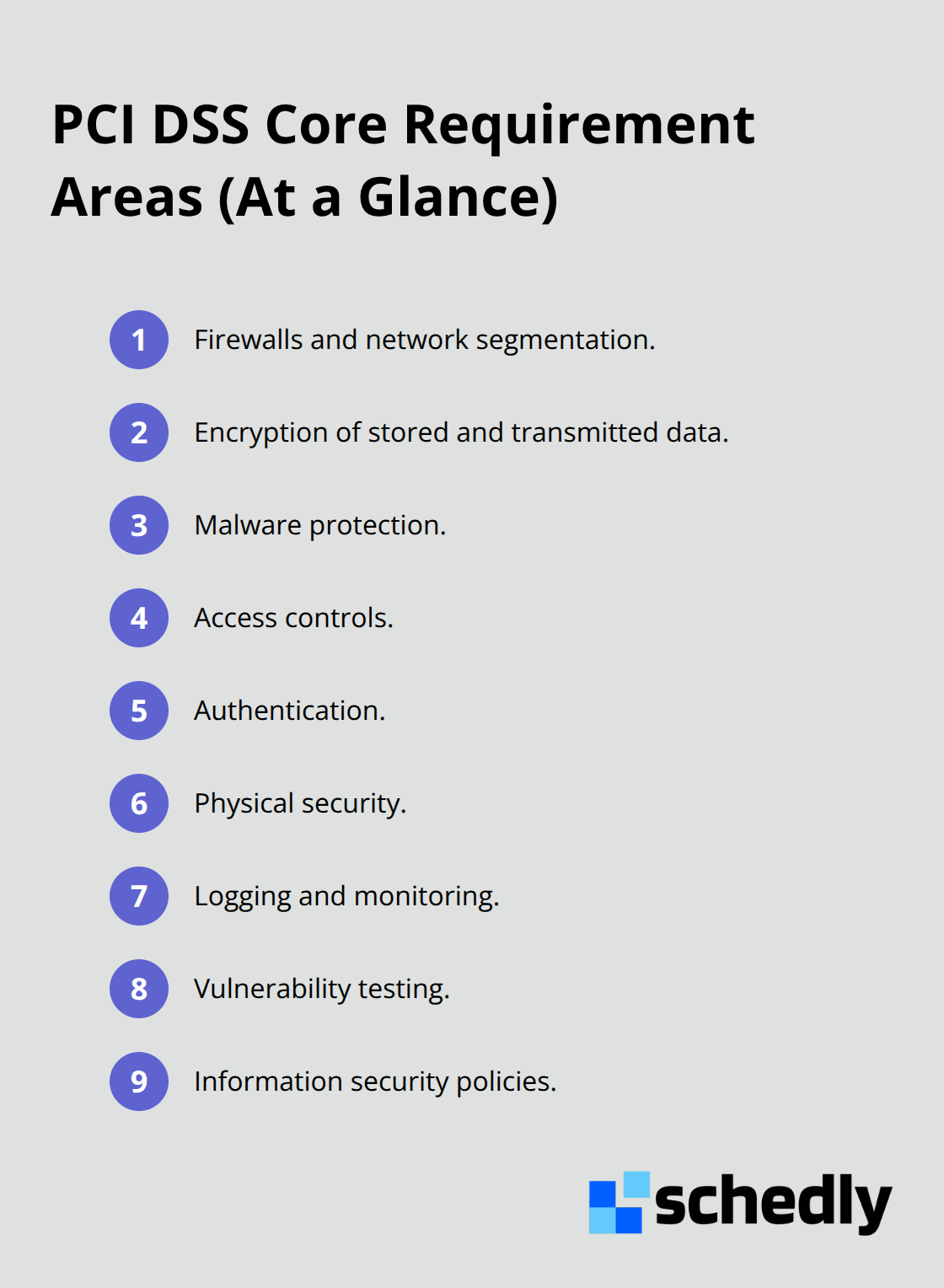
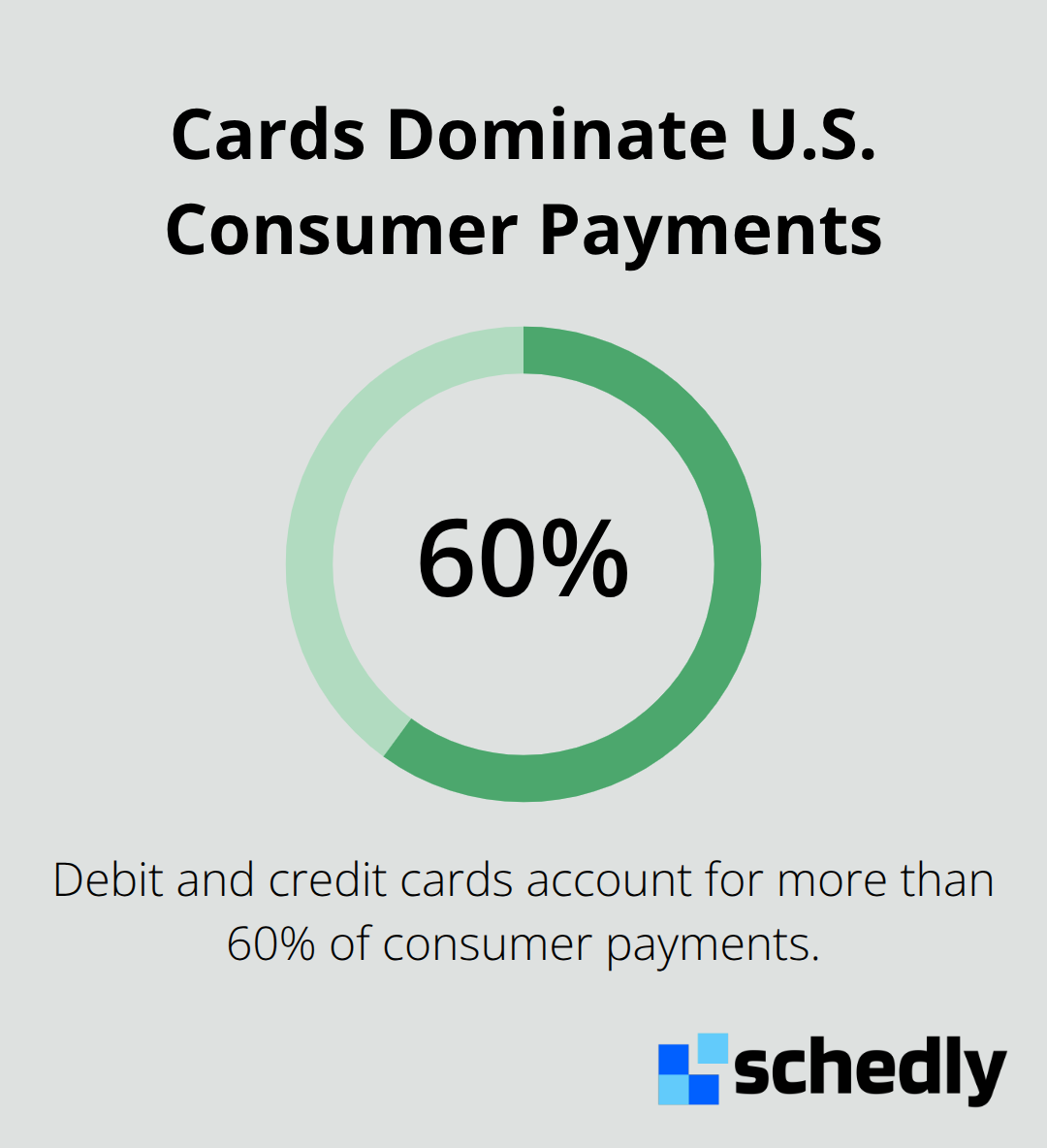
Debit and credit cards account for more than 60% of consumer payments, which is why the standards exist in the first place. The 12 core requirements span areas including firewalls and network segmentation, encryption of stored and transmitted data, malware protection, access controls, authentication, physical security, logging and monitoring, vulnerability testing, and information security policies. Each requirement addresses a specific vulnerability that attackers exploit to steal cardholder data.
How Your Transaction Volume Determines Your Compliance Level
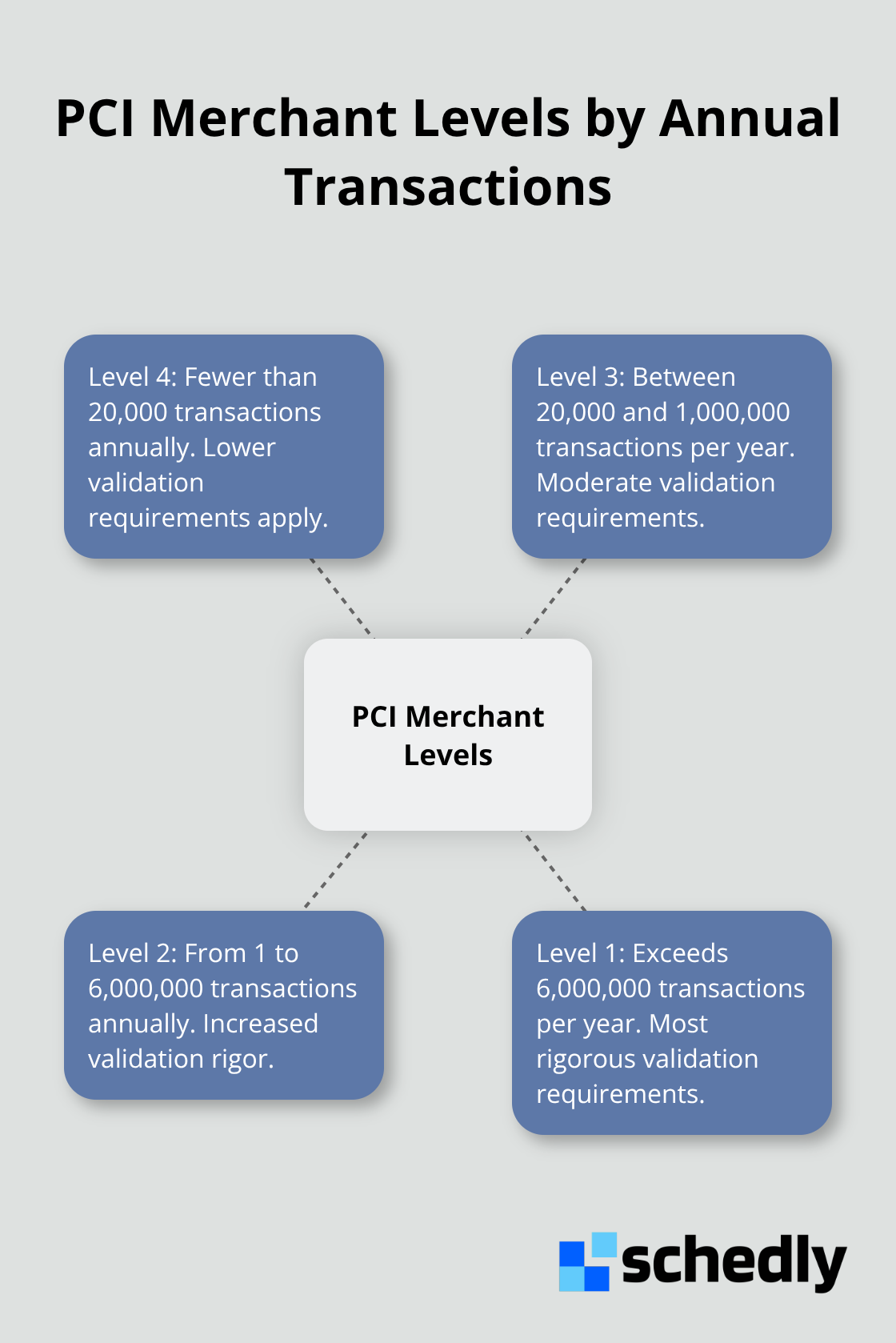
Your PCI level determines how strict your compliance obligations are, and this depends entirely on your annual transaction volume. Level 4 handles fewer than 20,000 transactions annually, Level 3 processes between 20,000 and 1,000,000, Level 2 ranges from 1 to 6,000,000, and Level 1 exceeds 6,000,000 transactions per year. Higher volumes mean more rigorous validation requirements.
Level 1 merchants typically need a Report on Compliance from a qualified assessor, while smaller merchants usually complete a Self-Assessment Questionnaire instead. Quarterly network scans by an approved scanning vendor are mandatory for most levels. These scans identify vulnerabilities in your systems that could compromise cardholder data before attackers find them.
Compliance Is Continuous, Not a One-Time Event
This isn’t a one-time checkbox exercise-PCI compliance is continuous. You must maintain controls year-round, revalidate annually, and adapt as your business changes. When you add new payment touchpoints, expand to new locations, or integrate with different processors, your compliance obligations may shift. A qualified assessor or your processor can help you determine whether your validation path remains appropriate for your current setup.
Why Non-Compliance Costs Real Money
Non-compliance carries serious financial and legal consequences that extend beyond fines. Card brands enforce compliance through acquiring banks, meaning your processor can terminate your ability to accept payments if you fail to meet standards. Data breaches have exposed billions of records in the US, and most of these incidents involved businesses that ignored PCI requirements.
A data breach exposes you to lawsuits, regulatory penalties, reputational damage, and the direct costs of incident response and customer notification. Visa and Mastercard impose substantial fines on non-compliant merchants, sometimes reaching tens of thousands of dollars per month. Your customers lose trust immediately when their payment data is compromised.
How Secure Payment Processing Protects Both Sides
Compliance demonstrates that you take security seriously and protects your ability to operate in the payment ecosystem long-term. When you implement PCI-compliant payment processing, you reduce the scope of sensitive data your systems handle directly. Using tokenization (where payment gateways like Stripe or PayPal handle card data instead of your servers) dramatically lowers your compliance burden and your breach risk. This approach protects your customers while making your compliance obligations more manageable, which is why understanding your integration options matters before you build your payment infrastructure.
How PCI Compliant Payment Processing Protects Customers
Encryption Shields Data at Every Stage
Encryption transforms card numbers into unreadable code during transmission and storage, making data worthless to attackers even if they intercept it. The strongest implementations use TLS encryption for data in transit and AES encryption for stored data-standards that meet PCI DSS requirements directly. Payment gateways like Stripe handle this encryption automatically, meaning your servers never touch raw card numbers. This technical layer protects your customers’ information across every transaction, from the moment they enter their card details through long-term storage in your systems.
Tokenization Reduces Your Compliance Burden
Tokenization replaces sensitive card data with unique tokens that have no value outside your specific transaction context. This approach reduces your PCI scope dramatically because your systems process tokens instead of actual card numbers, lowering both your compliance burden and your breach risk. A qualified assessor can determine whether you qualify for a lighter-scoped Self-Assessment Questionnaire based on your tokenization setup, potentially saving months of validation work. When you implement tokenization correctly, your infrastructure handles payment data far more safely than traditional card processing methods.
Fraud Detection Works Around the Clock
Fraud detection operates continuously in the background, analyzing transaction patterns in real time to catch suspicious activity before it reaches your bank. Modern payment processors screen transactions against databases of known fraud rings and use machine learning to identify anomalies specific to your business. Stripe, for example, integrates fraud detection into its checkout process, reviewing factors like device fingerprints, geographic velocity, and transaction history within seconds. This automated protection catches threats that manual review would miss, safeguarding both your customers and your revenue.
Network Scans Identify Vulnerabilities Before Attackers Do
Quarterly network scans by approved scanning vendors identify vulnerabilities in your infrastructure before criminals exploit them, fulfilling PCI DSS requirements while strengthening your actual security posture. These scans test your firewalls, network segmentation, and system configurations to prevent attackers from moving laterally through your environment if they breach one system. The combination of encryption, tokenization, and continuous monitoring means your customers’ data stays protected across every stage of the transaction lifecycle. This multi-layered approach transforms payment processing from a compliance checkbox into a genuine security advantage that separates trustworthy businesses from those cutting corners on customer protection.
Building Customer Confidence Through Secure Payments
Transparency About Payment Processing Builds Real Trust
Customers don’t need to understand PCI DSS in detail, but they need confidence that you handle their payment data responsibly. Transparency about how you process payments removes uncertainty and demonstrates genuine commitment to security rather than bare compliance. When you clearly explain that you use tokenization (meaning card numbers never touch your servers) or that you partner with PCI Level 1 processors like Stripe, you give customers concrete reasons to trust you. Most businesses hide payment details in legal disclaimers, but transparency works better. Publish your security approach on your checkout page or payment FAQ, explain which encryption standards protect their data, and mention that you conduct regular security audits. This honesty creates confidence that generic security badges never achieve.
Security Certifications Require Clear Explanation
Security badges and certifications only build trust if you explain what they actually mean. A PCI DSS compliance certificate proves you’ve met baseline security requirements, but most customers don’t know what that means or why it matters. Instead of just displaying a badge, tell customers: We maintain PCI DSS Level compliance, which means our payment infrastructure undergoes annual validation by independent security assessors and quarterly network vulnerability scans by approved vendors. This specificity converts a meaningless logo into evidence of real protection. If you use a processor like Stripe or PayPal, their compliance certifications transfer to you automatically if you implement their recommended integration methods. Communicate this advantage directly: your payment processing inherits the security standards of a company that handles millions of transactions daily and invests heavily in fraud prevention and encryption.
Continuous Audits Prove Security Remains Active
Annual PCI compliance validation proves you maintain security controls, but quarterly network scans demonstrate that security remains ongoing rather than a one-time achievement. Communicate your audit schedule to customers, especially in industries where security concerns run high (healthcare, financial services, legal practices). Let customers know: We conduct quarterly vulnerability assessments and maintain continuous monitoring of our payment infrastructure. This messaging transforms compliance from a checkbox into evidence of persistent vigilance. When you discover vulnerabilities during these scans and fix them promptly, you strengthen defenses actively. Document these improvements and reference them when discussing payment security with customers. If attackers target your industry specifically, publish your response: we identified the threat, patched affected systems within 48 hours, and verified the fix through additional scanning. This narrative of continuous improvement builds far more trust than static security certifications.
Final Thoughts
PCI compliant payments form the foundation of a business that customers trust and that operates without the constant threat of breaches, fines, or payment processing shutdowns. Attackers target payment data relentlessly, and compliance protects you from becoming another data breach statistic. When you implement encryption, tokenization, and continuous monitoring, you build infrastructure that genuinely protects your customers while reducing your own compliance burden.
Start by determining your PCI level based on your annual transaction volume, then select a payment processor that handles the technical complexity for you. Stripe, PayPal, and similar PCI Level 1 service providers absorb much of your compliance responsibility when you use their recommended integration methods like tokenization or hosted payment pages. This approach qualifies you for lighter-scoped Self-Assessment Questionnaires instead of expensive on-site audits, and you can schedule quarterly vulnerability scans with an approved scanning vendor to maintain your security controls year-round.
Customers who see transparent communication about your security practices, understand that you conduct regular audits, and know their card data never touches your servers develop genuine confidence in your business. This trust translates directly into higher conversion rates, lower cart abandonment, and stronger customer loyalty. If you manage customer payments alongside scheduling and booking operations, Schedly integrates secure payment processing through PCI compliant gateways, automating both your booking workflow and payment collection while maintaining the security standards your customers expect.


