Customer reference management software has become essential for businesses that rely on client testimonials and case studies to win new deals. At Schedly, we’ve seen firsthand how the right tools transform how companies gather, organize, and leverage customer success stories.
Most businesses still manage references manually, wasting time and losing track of who can speak to their value. This guide walks you through everything you need to know to implement a system that actually works.
What Customer Reference Management Software Actually Does
Customer reference management software centralizes the process of collecting, organizing, and deploying customer success stories to accelerate sales. Unlike generic CRM systems that track leads and deals, reference management platforms focus specifically on building and maintaining a library of preapproved customers who can speak to your product’s value. These tools automate the work of nomination, request fulfillment, and content curation. Gartner research shows that companies using AI-enabled reference workflows see measurable improvements in efficiency and ROI. The core functionality includes nomination tracking to identify eligible customers, request automation to match the right references to specific deals, a centralized content library for case studies and testimonials, and integration with your sales tools so reps can access references without leaving their workflow.

Most platforms also track reference usage and tie it back to revenue, which is critical because it lets you prove that your reference program actually influences deals.
Why Traditional CRM Systems Fall Short
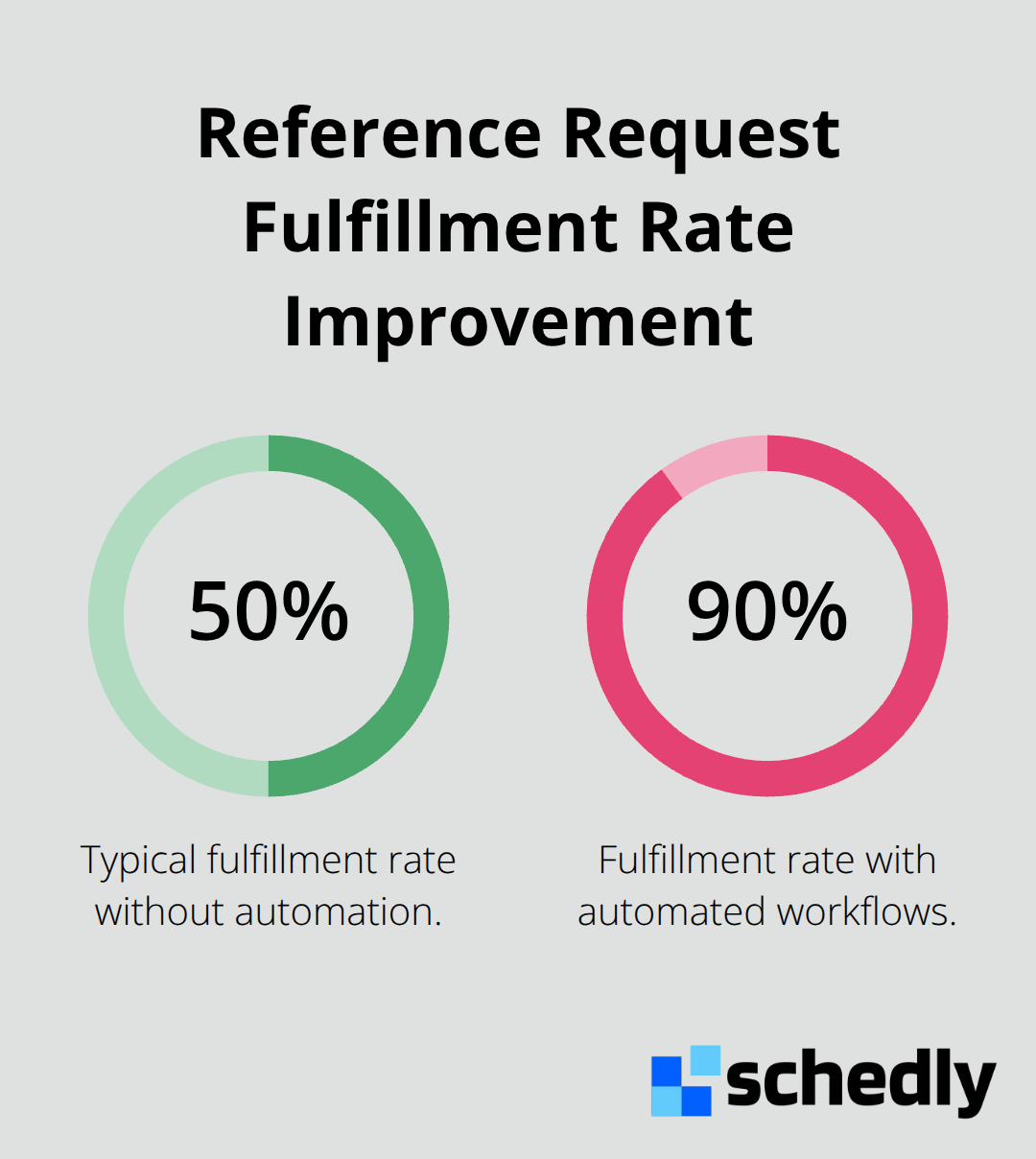
Your standard CRM manages contacts and opportunities, but it doesn’t solve the reference problem. Sales reps still spend hours searching emails and spreadsheets to find someone willing to take a reference call, only to discover that person has moved on or no longer wants to participate. A dedicated reference platform eliminates that friction by maintaining an always-on pipeline of engaged customers who have already agreed to be references. The difference matters operationally: without automation, reference request fulfillment rates typically hover around 50-60%, but platforms with automated workflows consistently achieve 90% or higher. CRM integrations are essential, though, which is why the best reference management tools connect directly to Salesforce, HubSpot, or similar systems so deal information flows seamlessly between applications.
Features That Actually Move the Needle
Nomination and request workflows save enormous amounts of time by automating outreach to eligible customers and tracking their responses. Content organization and governance keep your reference library searchable and compliant, preventing outdated or irrelevant testimonials from circulating. Best-fit matching algorithms recommend the right reference for each deal based on industry, use case, or solution, dramatically improving conversion rates compared to generic references. CRM integration is non-negotiable because it lets sales teams access references directly within their deal pipeline without context switching. Analytics dashboards measure reference usage, deal velocity, and revenue influenced-tying program success to business outcomes. AI-powered tools reduce manual workload through email outreach automation, scheduling, and initial content curation, which Gartner research indicates is increasingly expected by executives investing in sales enablement technology.
How These Tools Connect to Your Existing Stack
Reference management platforms work best when they talk to the tools your team already uses. Salesforce, HubSpot, and similar CRM systems become far more powerful when reference data flows in automatically. This integration means your sales reps see which references match a specific deal without switching between applications. Payment processing, calendar synchronization, and workflow automation all become possible when your reference platform connects to your broader tech ecosystem. The right integrations eliminate manual data entry and reduce the time it takes to match a reference to an opportunity.
Now that you understand what reference management software does and why it matters, the next section explores which industries benefit most from these platforms and how different business types implement them.
Industries Where Reference Management Transforms Deal Velocity
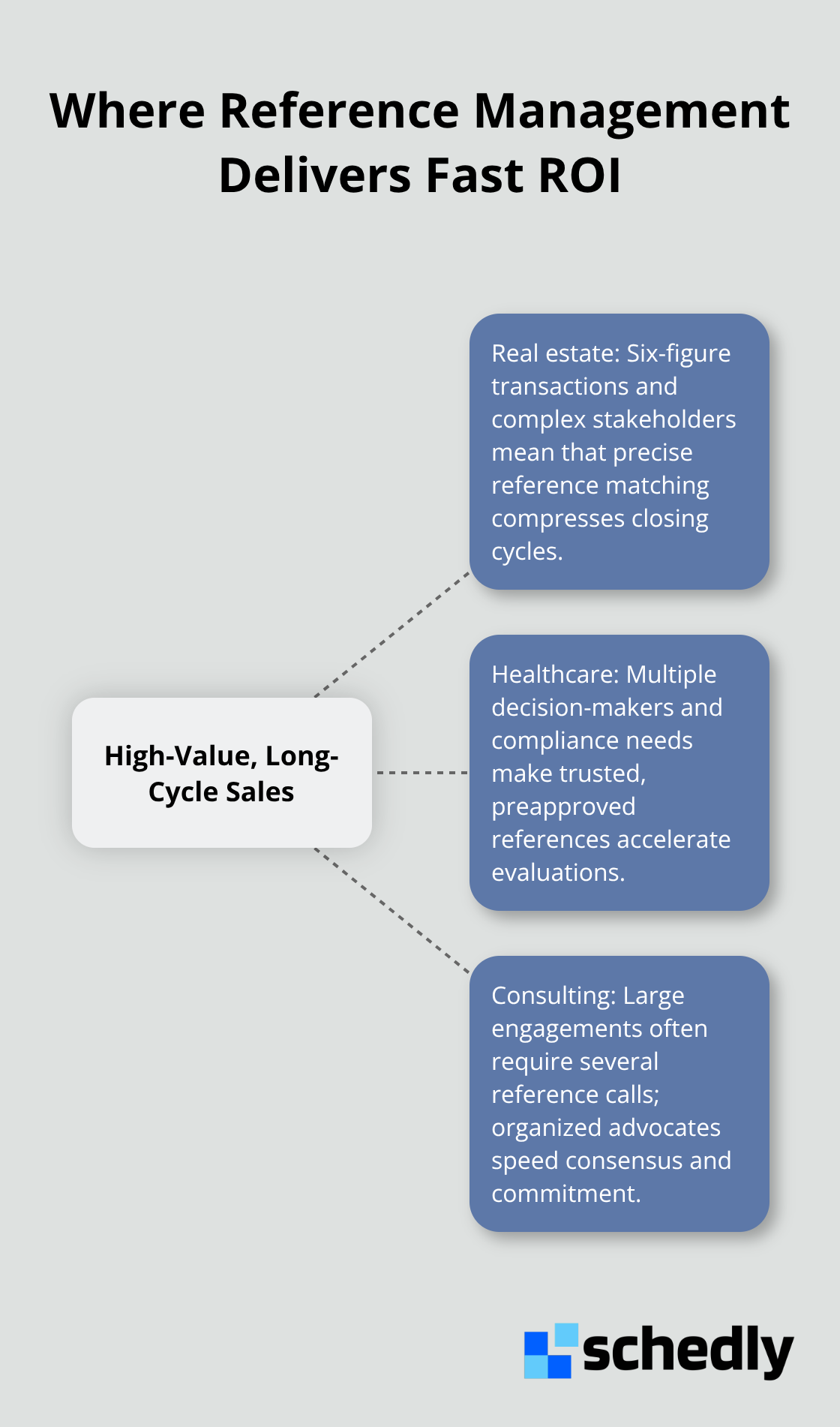
Reference management software accelerates sales in specific sectors where buyers demand peer validation before committing large budgets. Real estate agents, healthcare providers, and consulting firms all face the same obstacle: prospects need to hear from comparable customers, yet finding the right reference consumes weeks. These industries operate on trust and credibility, so a single reference call can determine whether a deal closes or stalls. The challenge intensifies because buyer personas shift constantly within each sector.
Real Estate: Matching References to Specific Buyer Types
Real estate teams struggle most with reference fragmentation. A commercial developer needs references from other developers who completed similar projects, while a residential buyer wants to hear from homeowners in the same neighborhood. Without a reference platform, agents waste time hunting through old emails or hoping past clients answer the phone. With automation, they match the right reference to the right prospect in minutes, which accelerates closing cycles by 10-30% according to industry data. Real estate transactions typically involve six-figure commitments and sales cycles, making reference acceleration particularly valuable. The speed advantage compounds across multiple deals per month, creating measurable pipeline impact.
Healthcare and Legal Services: Compliance and Credibility
Healthcare practices face tighter constraints because patient privacy regulations limit what testimonials can say publicly. Reference management tools solve this by maintaining a library of customers who have already consented to be contacted, eliminating compliance headaches. Legal firms and management consulting practices operate on reputation alone, meaning references aren’t optional-they’re the entire sales process. A potential client won’t hire a law firm without speaking to similar companies the firm has represented. Consulting engagements often exceed $500,000, so buyers demand multiple reference calls with different stakeholders. Manual reference coordination here creates bottlenecks that literally cost deals.
Why Specificity Matters More Than Volume
These sectors share another critical trait: their buyers are highly specific about who they’ll listen to. A hospital won’t take advice from a clinic, and a Fortune 500 company won’t take advice from a startup. Reference management platforms solve this specificity problem through best-fit matching, ensuring references come from genuinely comparable organizations. Without this precision, references lose credibility and fail to influence deals. Healthcare practices spend months evaluating software vendors, so having preapproved customer references available immediately shortens evaluation timelines significantly. A reference platform lets consultants maintain an organized network of advocates across different service lines and industries, reducing the time to fulfill requests from days to hours.
Where ROI Emerges Fastest
Industries with the highest deal values and longest sales cycles see the fastest ROI from reference management. Real estate, healthcare, and consulting firms all operate in the 60-180 day sales cycle range, where multiple stakeholders must be convinced before commitment. Industries with smaller deal sizes or shorter cycles see measurable but slower returns because the urgency to accelerate is lower.
The real competitive advantage emerges when firms in high-value sectors treat reference management as a strategic asset rather than an afterthought, building it into their sales process from day one instead of scrambling when deals stall. This foundation positions teams to implement best practices that sustain momentum across quarters.
How to Build a Reference Pipeline That Actually Works
The difference between a reference program that stalls and one that accelerates deals comes down to execution, not software. Most teams treat reference management as a side task, scrambling when deals need validation instead of maintaining an active pipeline. Start by auditing your current customer base to identify who can credibly speak to your product’s value. This means mapping customers by industry, company size, solution deployed, and implementation timeline so you can match them to specific buyer profiles later.
Gartner research shows that companies with preapproved customer references achieve high fulfillment rates on reference requests. Create a simple spreadsheet or database that tracks each potential reference’s willingness to participate, their availability, and the specific use cases they can speak to.
Set Expectations Without Incentives
Set expectations during onboarding by mentioning the reference program as a way to support peer customers, but never make participation contractual or lead with incentives. Studies show that paid participation distorts quality and inflates costs without improving conversion rates. Instead, cultivate partnerships with customers by offering mutual value such as co-branded case studies, speaking opportunities at industry events, or features in your marketing materials.
Expand your reference network within customer organizations by connecting with multiple departments and roles. A healthcare vendor might have references from IT, clinical operations, and finance, each speaking to different buyer personas in a prospect’s organization. This diversity dramatically improves matching accuracy and relevance.
Automate Workflows for Speed
Automation transforms reference coordination from a manual bottleneck into a scalable process. Build workflows that trigger reference requests based on deal stage, industry, or solution type so the right customer receives contact at the right moment. When a sales rep opens a deal for a mid-market healthcare client, the system should automatically identify preapproved references from similar healthcare organizations and surface them in the CRM without the rep leaving their workflow. This seamless integration matters because it removes friction that kills momentum.
Track response times ruthlessly and try for 24-hour fulfillment on reference requests. If a reference takes five days to respond, the deal window often closes. Maintain a content library of prerecorded testimonials, case studies, and video clips so you have materials ready immediately when a prospect needs validation. Real estate firms that maintain updated video testimonials from recent transactions can share proof of success within hours instead of days.
Measure What Matters
Analytics dashboards should measure reference usage rates, deal velocity for opportunities that included references, and revenue influenced by the program. Try for 50% or higher usage of reference materials across your sales team, which indicates the program has genuine traction. Monitor win rate uplift by comparing deals that included references to those without, trying for a 20-50% improvement. These metrics prove the program’s impact and justify continued investment in the infrastructure and people required to maintain it.
Final Thoughts
Reference management software transforms how companies win deals by eliminating the weeks sales teams waste hunting for the right customer to validate their pitch. Without it, prospects grow impatient waiting for peer validation while your team scrambles through emails and spreadsheets. With the right platform, that friction disappears-your team matches references to deals in minutes, fulfillment rates jump from 50% to 90%, and sales cycles compress by weeks.
Choosing the right solution depends on your specific workflow and primary bottleneck. Start by identifying whether you struggle most with finding eligible references, organizing your customer library, or integrating references into your sales process, then select a platform that solves that pain point first. Look for customer reference management software that integrates directly with your CRM so references surface without context switching, and prioritize automation capabilities because manual processes don’t scale. Analytics dashboards should measure reference usage and revenue influenced so you can prove the program’s impact to leadership.
Getting started requires three concrete steps: audit your customer base and identify 20-30 customers who can credibly speak to your product’s value across different industries and use cases, build a simple tracking system to monitor their willingness to participate and availability, and implement automation workflows that trigger reference requests based on deal stage and buyer profile. Schedly offers workflow automation and CRM capabilities that help teams manage reference coordination alongside broader scheduling needs, making it easier to book calls and track participation across your customer base.


